The Labyrinth Of Knossos: What Guides Say And What You Can Actually See
The Labyrinth of the Minotaur is a story later Greeks told about the palace, not a maze on the site. Here is what the ruins actually hold and how the legend meets the archaeology.
Short answer
The Labyrinth is legend: later Greek tradition tied the Minotaur and Theseus to the palace layout. On site you see real remains, the Central Court, the Throne Room and the West Magazines, plus replica frescoes. Guided trips from €60 per person put a licensed guide inside the palace.
The word "labyrinth" on a Knossos booking page sells a story. There is no maze at the palace, and no archaeologist has found one. What exists is a vast, partly reconstructed Bronze Age building about 5 km south of Heraklion, plus a legend that later Greek tradition attached to its confusing layout. The gap between the two is exactly where a guided visit earns its price, because a licensed guide can tell you which parts are second-palace masonry, which parts are Arthur Evans' controversial concrete, and which parts are pure myth. This article walks through all three: the legend, the real rooms, and the trips that put a guide beside you inside the gates.
What Is The Labyrinth Of Knossos?
The Labyrinth is a myth: the story of a maze built to hold the Minotaur, and of Theseus finding his way out, told by later Greek tradition and tied to the confusing layout of the palace at Knossos. Nothing on the site is identified as the Labyrinth, and no excavation has found a maze. The palace is a real, complex building; the legend is a story told about it.
The myth says that Daedalus built a labyrinth for King Minos to imprison the Minotaur, a creature part man and part bull, and that the Athenian hero Theseus entered it, killed the creature and escaped by following a thread. That is legend, and it stays legend here. Archaeology at Knossos has produced palace walls, storerooms and frescoes, not a maze and not evidence of a bull-man.
The connection is old and durable. The UNESCO inscription for the "Minoan Palatial Centres" World Heritage Site acknowledges the link itself: later Greek tradition associated the palace with the Labyrinth myth, probably because the sprawling, multi-level building with its many rooms and passages struck ancient visitors as maze-like. The word survives in the trip name of one tour covered here, "Ticket With Live Guide", whose listing carries "labyrinth" in its title, but no trip shows you a maze, because there is none to show.
What a visitor can do is stand in the Central Court and understand why the story stuck. A building of that complexity, ruined and rebuilt across centuries, genuinely is hard to read without help.
| Part Of The Myth | Status | Where It Meets The Real Site |
|---|---|---|
| The Labyrinth (a maze) | Legend | Linked by later Greek tradition to the palace's complex layout; no maze found |
| The Minotaur | Legend | Echoed in bull imagery, including the replica charging-bull fresco at the North Entrance |
| Theseus and the thread | Legend | A story told about the palace; no evidence on site |
| Daedalus the builder | Legend | The real builders were Minoan; the first palace rose soon after 1900 BCE |
| King Minos | Legend | Evans named the civilisation "Minoan" after him; an interpretation, not a record |
Is The Labyrinth A Real Place You Can Walk Through?
No. There is no labyrinth to walk at Knossos, and no tour visits one. What you walk is the archaeological site of the palace: the Central Court, the Throne Room, the Grand Staircase, the Queen's Megaron, the West Magazines and the surrounding paved ways. Guides on the trips covered here are licensed for the palace where their trip entry says so, and the story they work with is the real building plus a legend clearly framed as legend.
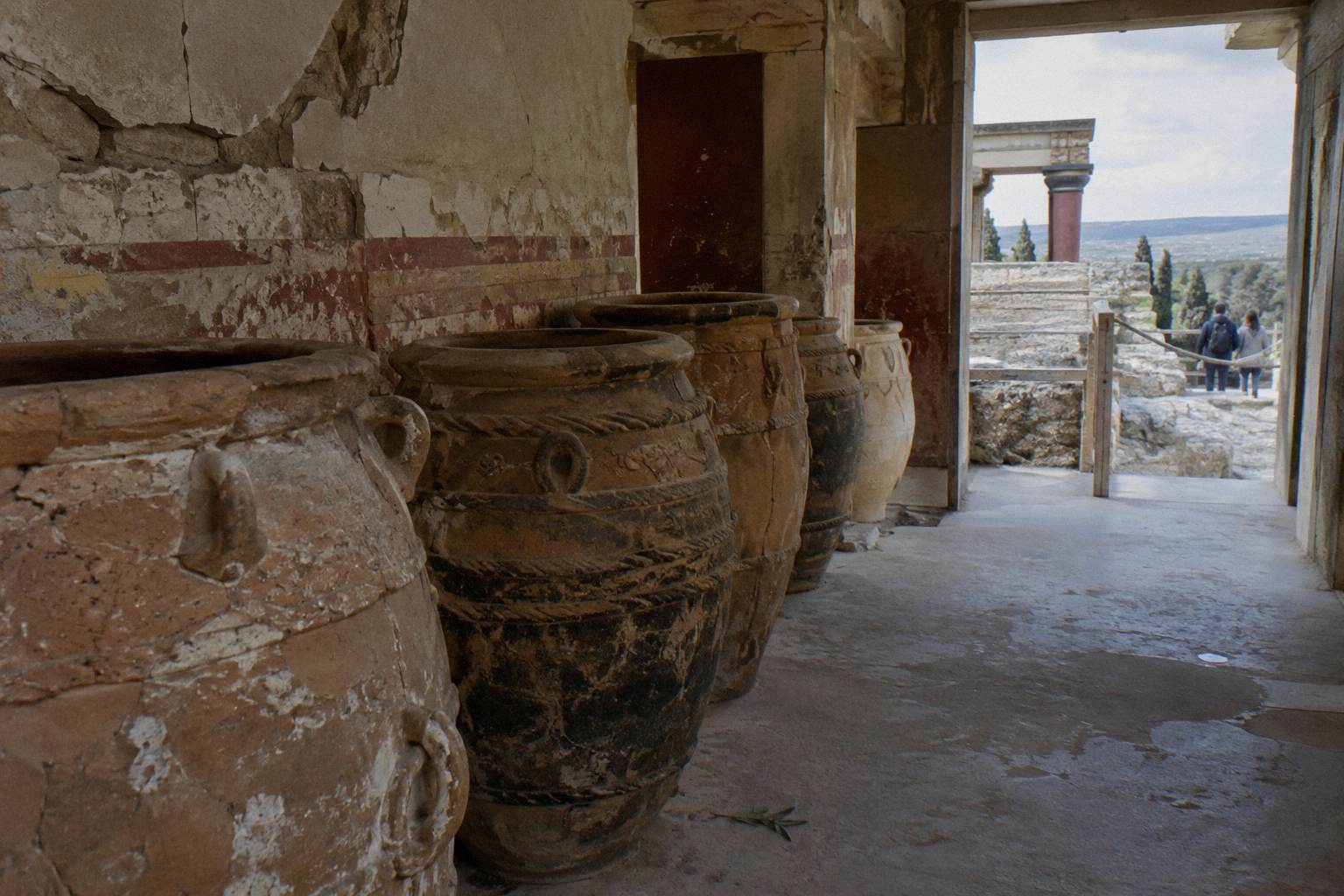
The site's own vocabulary is rooms and courts, not mazes. The Central Court is a large paved rectangular court at the heart of the palace. The Royal Road is a paved way. The Theatral Area, the South Propylaeum and the West Magazines, storerooms with large pithoi, many of them original, are all named parts of the ruin. A guided visit moves through places like these; it does not solve a puzzle.
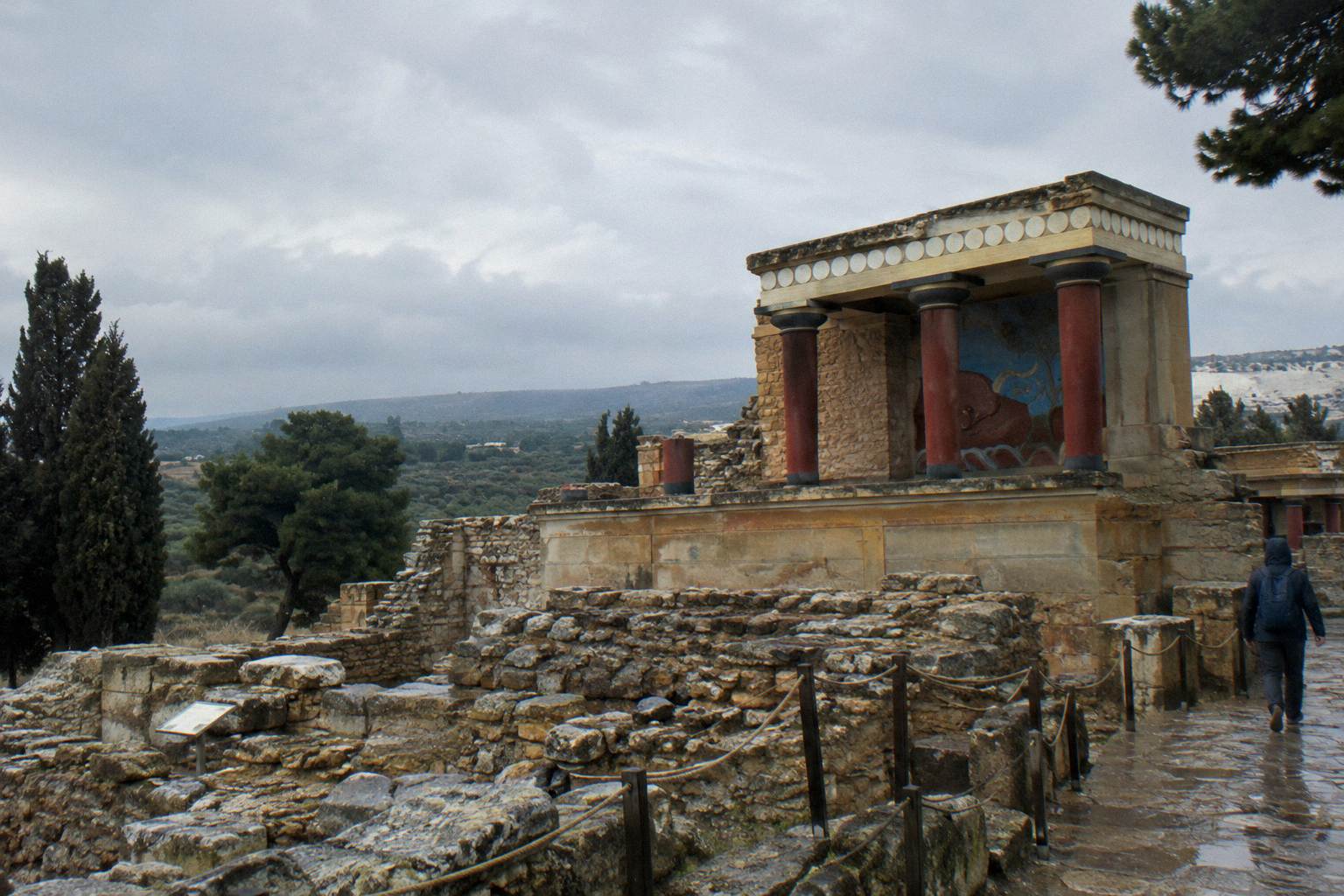
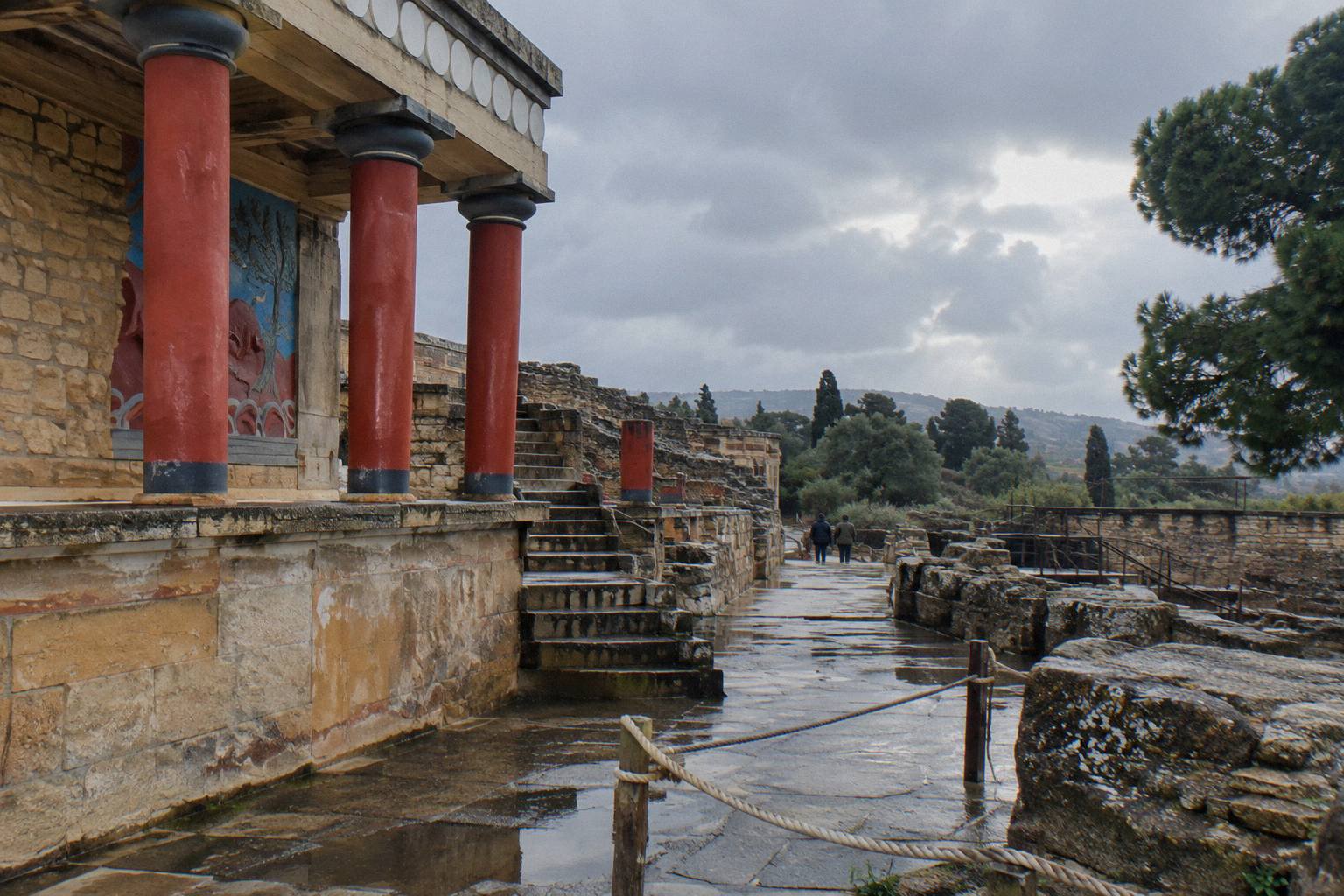
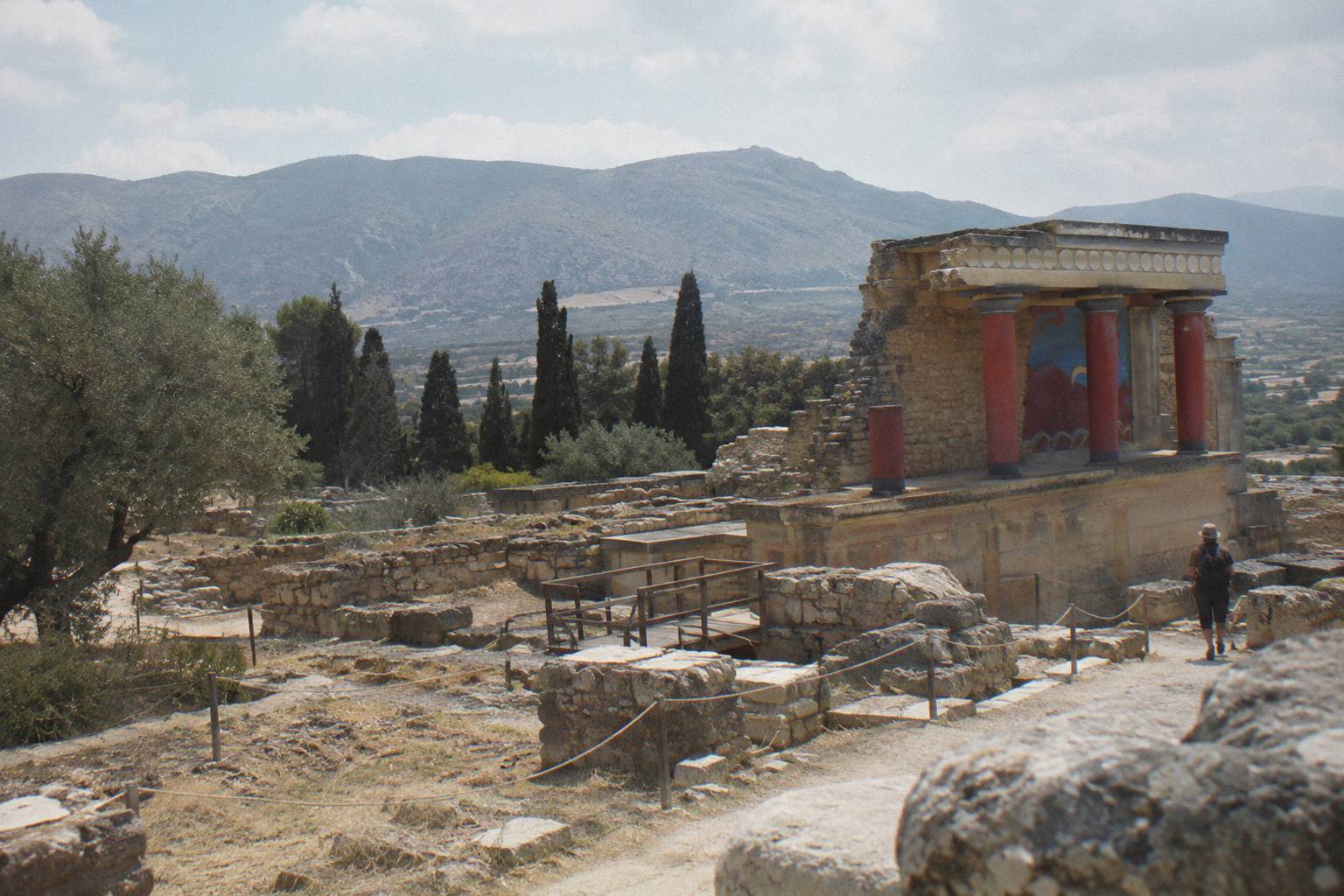
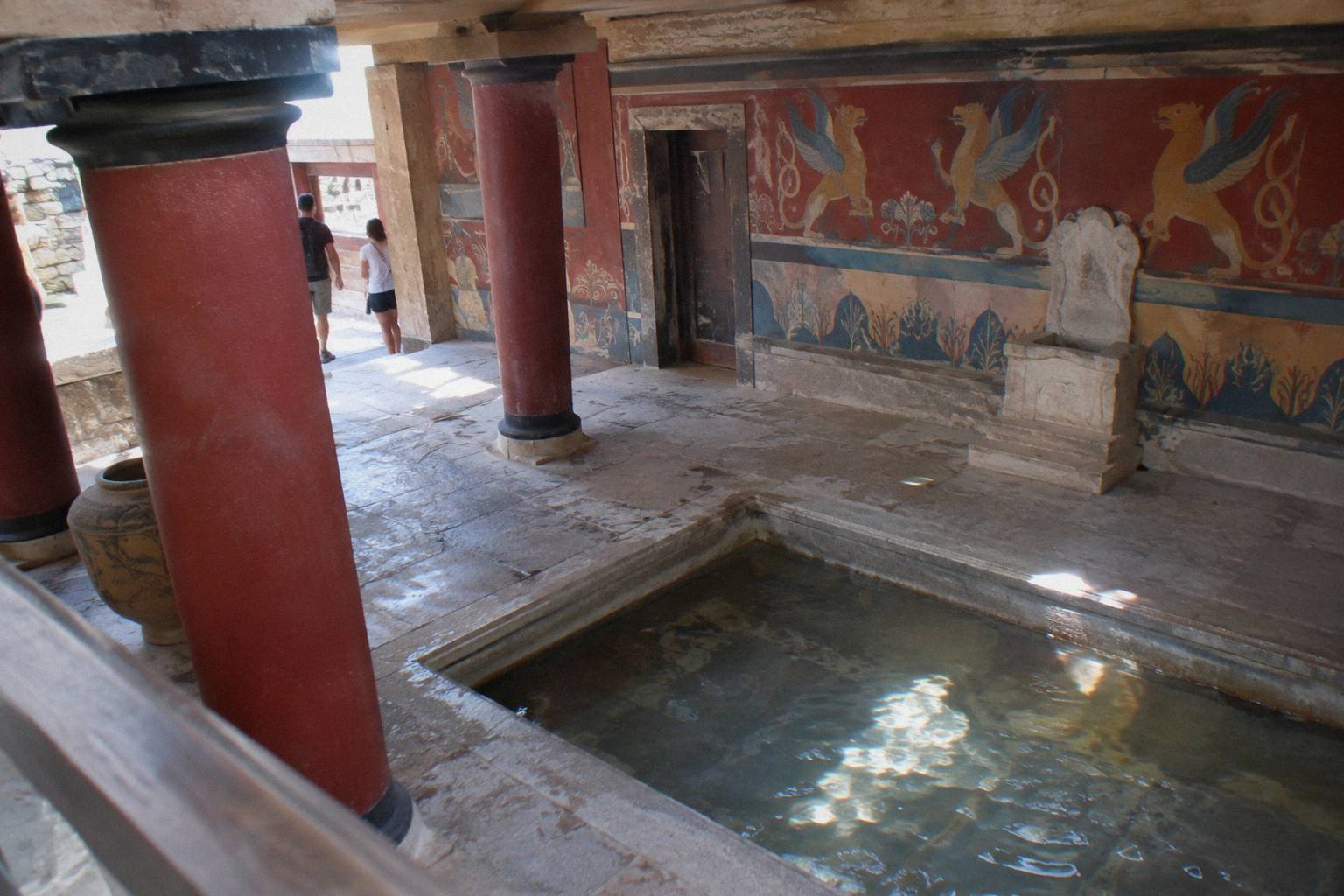
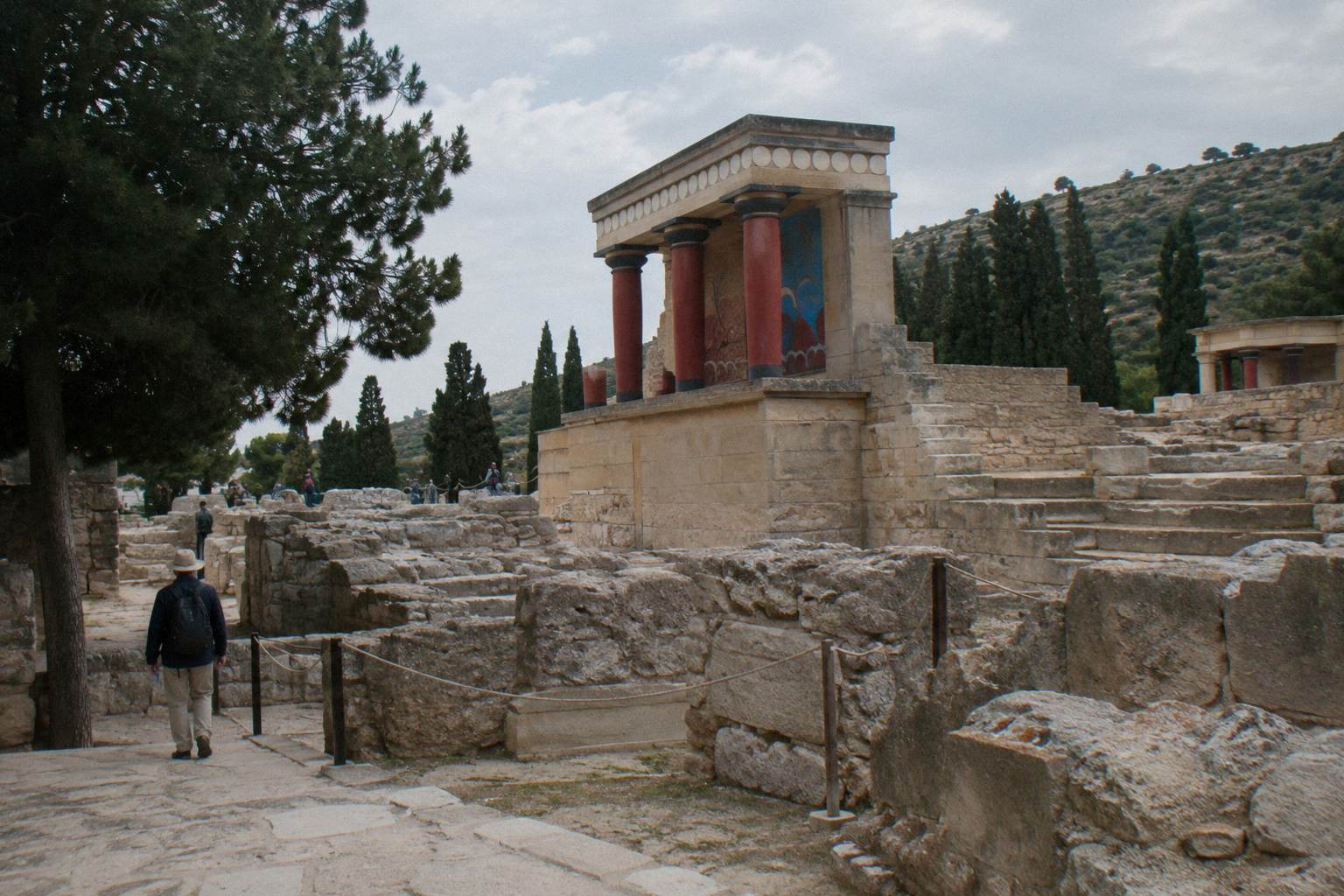
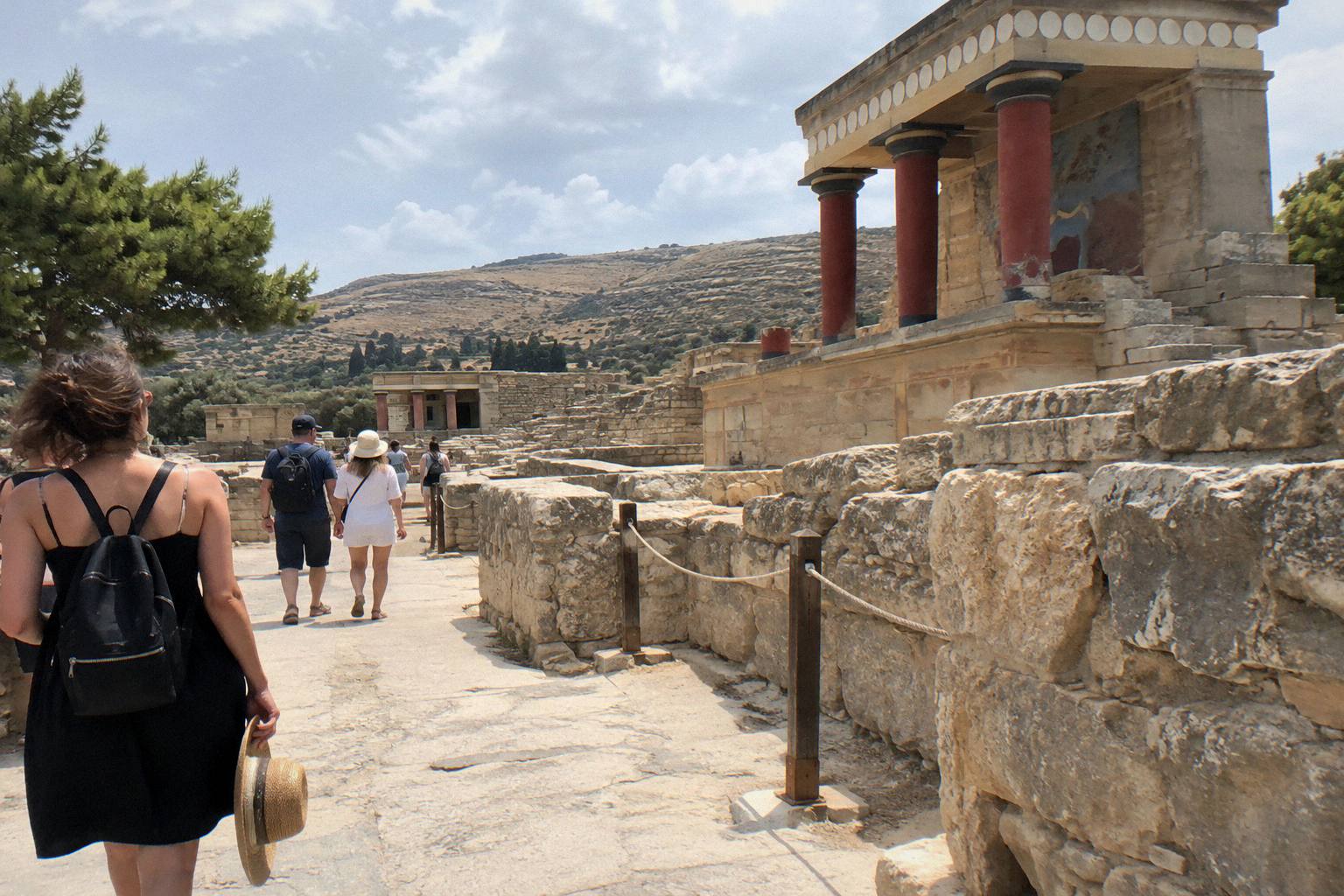
Where the myth surfaces, it surfaces as interpretation. A charging-bull fresco, a replica, stands at the North Entrance. The Throne Room holds a gypsum throne against the wall, benches and a lustral basin, with reconstructed griffin frescoes; what the room was actually used for is still debated. These are the details that make the legend feel plausible on the ground, and a licensed guide can place each one for you without pretending the Minotaur existed.
For a deeper look at the same question from the ticket side, see whether the palace ticket covers a guided walk. The short version: the entrance ticket gets you onto the site, the guide gets you the story, and neither includes a labyrinth.
If you came for the myth and want a guide to untangle it from the archaeology in person, three shared trips put a licensed guide inside the palace with the entry ticket included.
Which Knossos Trips Put A Licensed Guide Beside You Inside The Palace?
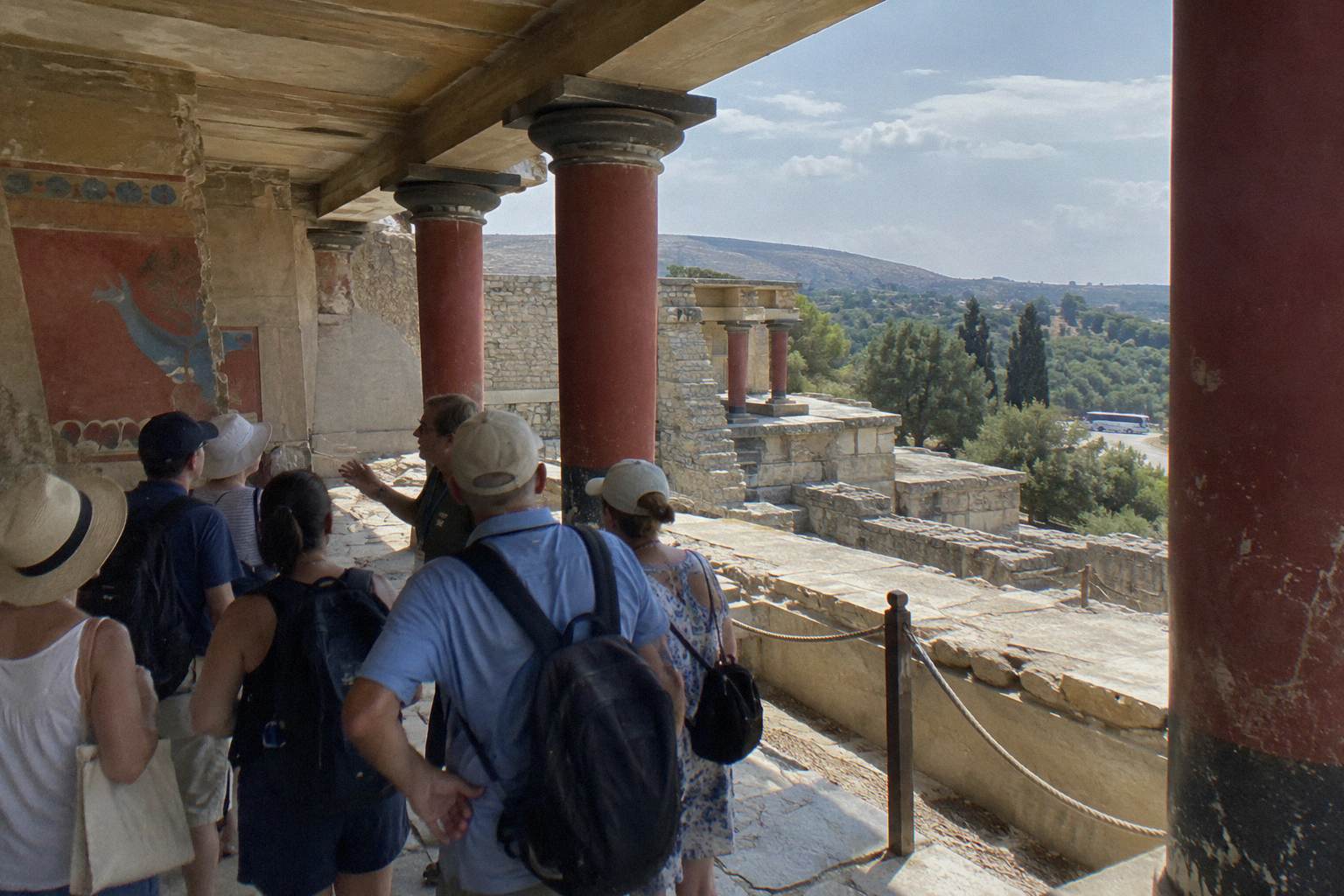
"Ticket With Live Guide" (from €89 per person, 4.6 across 78 reviews) and "KnossosGuides, Ticket Included" (from €89 per person, 4.9 across 48 reviews) both include a licensed tour guide for a small-group guided tour inside the palace, with the palace entry ticket and skip-the-ticket-line service included. "Small Group, Skip The Line" (from €89 per person) matches that setup with a licensed guide for a group visit. All three run 1 hour 30 minutes.
The guide question is the one place where the trips covered here genuinely differ, and the difference is per trip, never a blanket rule. On "Ticket With Live Guide", operated by Business Management Services L.P., the palace guide is licensed and the group is small, with headsets when the group is over 6 (7 to 16 pax) and an optional Archaeological Museum add-on. The same operator's "Early Morning Entry" (from €89 per person) carries the identical licensed-guide wording at an earlier hour.
"KnossosGuides, Ticket Included" runs the same shape: licensed guide in a small group, ticket included, skip-the-ticket-line service, museum add-on available. "Small Group, Skip The Line", run by Experience Travel Crete, includes a licensed guide for a guided tour in a group, the palace entry ticket and the skip-the-ticket-line service, with headsets for groups over 6 (7 to 15 pax). Every one of these three carries free cancellation up to 24 hours before the start.
The contrast sits on the day trips. "Private Half Day, Cruise Friendly" (from €62, 5.0 across 108 reviews) provides an English-speaking driver-host, with a licensed guide as an optional extra at extra charge. "Private Museum Tour, Per Group" (from €560 per group, 5.0 across 25 reviews) includes a professional licensed tourist guide across a 6 to 8 hour private day. Neither is better or worse for the legend, but only a licensed palace guide is trained to interpret the site officially, and only the trips whose entries say so include one.
The table below lines up the guide question across the trips most readers compare when the Labyrinth story is what brought them:
| Trip | Operator | Duration | Palace Guide | Palace Ticket |
|---|---|---|---|---|
| Ticket With Live Guide | Business Management Services L.P. | 1 hour 30 minutes | Licensed, included | Included |
| KnossosGuides, Ticket Included | KnossosGuides | 1 hour 30 minutes | Licensed, included | Included |
| Small Group, Skip The Line | Experience Travel Crete | 1 hour 30 minutes | Licensed, included | Included |
| Early Morning Entry | Business Management Services L.P. | 1 hour 30 minutes | Licensed, included | Included |
| Budget Fare Guided Walk | Business Management Services L.P. | 1 hour 30 minutes | Licensed, included | Excluded, paid separately |
| Private Half Day, Cruise Friendly | SunSud Tours | 4 to 6 hours | Driver-host; licensed guide optional extra | Excluded |
| Private Museum Tour, Per Group | Acacia Tours | 6 to 8 hours | Licensed, included | Excluded, paid on site |
Does A Trip Named "Labyrinth" Actually Show You The Maze?
"Ticket With Live Guide" is the one trip whose listing carries "labyrinth" in its name, and no, it does not show you a maze, because none exists. What the €89 per person trip provides is a licensed guide in a small group inside the palace for 1 hour 30 minutes, with the entry ticket and skip-the-ticket-line service included. The name borrows the myth; the tour delivers the real building.
That trip is the natural pick for a reader who arrived through the Minotaur story. Business Management Services L.P. runs it, free cancellation applies up to 24 hours before the start, and meals, drinks, gratuities and transfer are excluded, so the price is a palace visit and nothing padded around it. The optional Archaeological Museum add-on matters more than it might seem: the original bull-leaping and dolphin frescoes live there, so the add-on is how you see the actual artwork behind the replicas. You can read the full details on the Ticket With Live Guide tour page, or check availability for your date.
One thing worth knowing before booking any palace trip: the ticket question is its own subject, covered in what a Knossos tour price covers, because the €89 trips above include the palace entry while several cheaper options do not.
Is a licensed guide the part you actually care about? Free cancellation applies up to 24 hours before the start on the guided options above.
What Can You Actually See At The Palace Of Knossos?
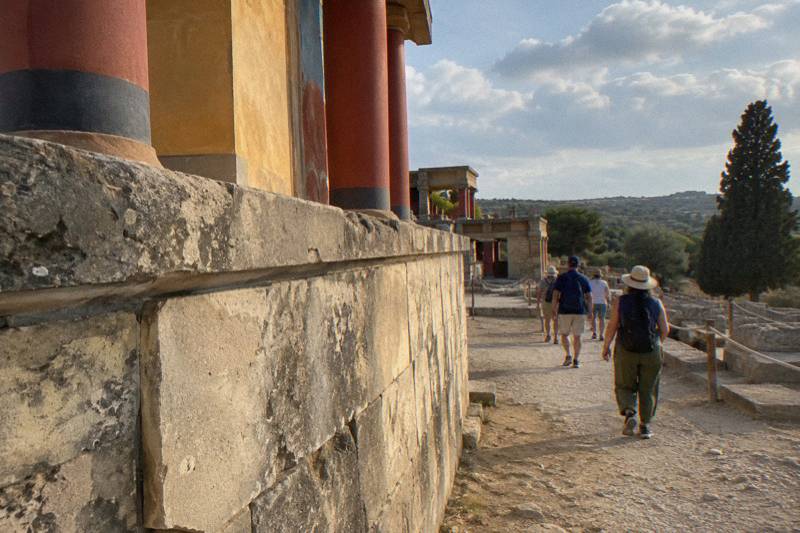
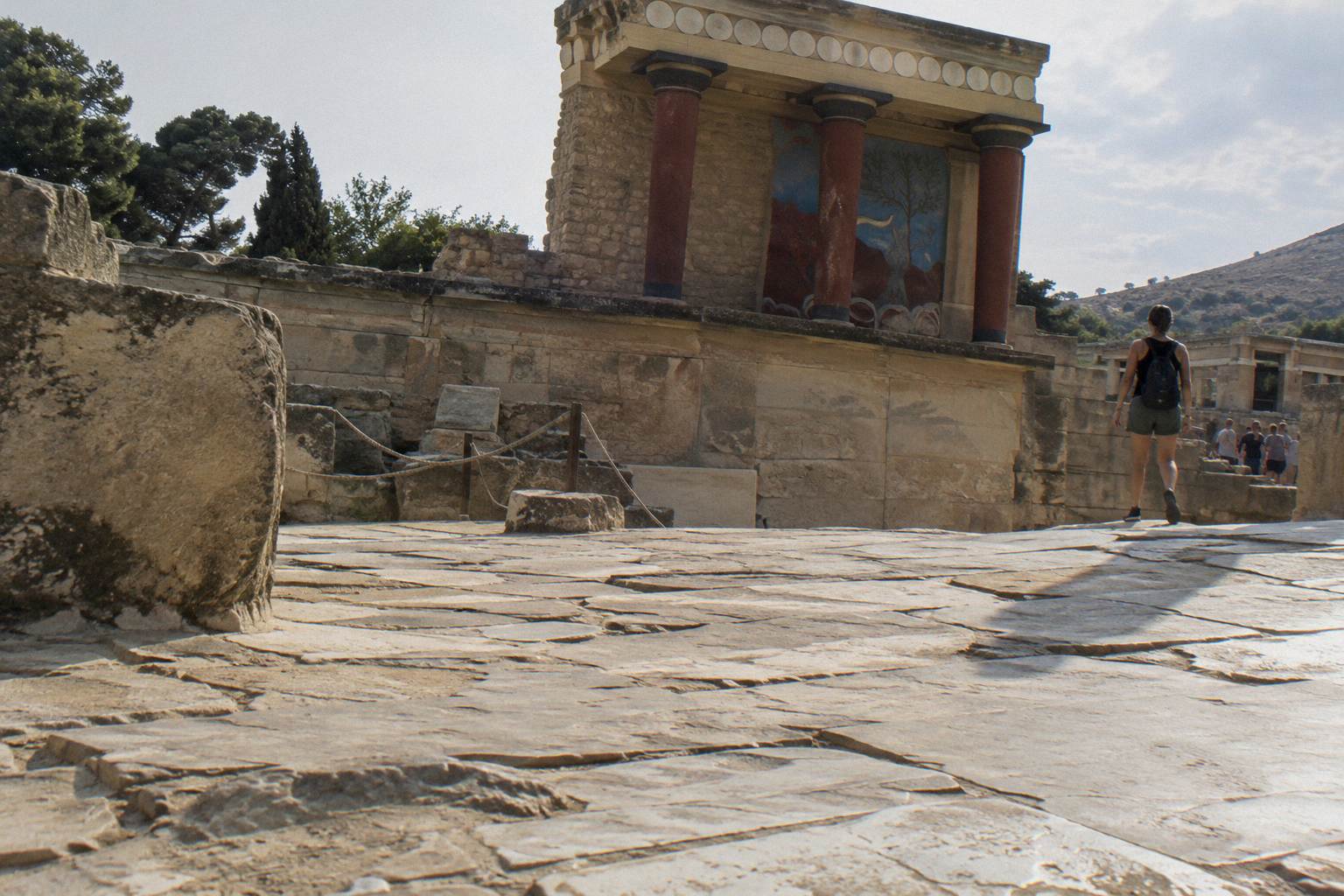
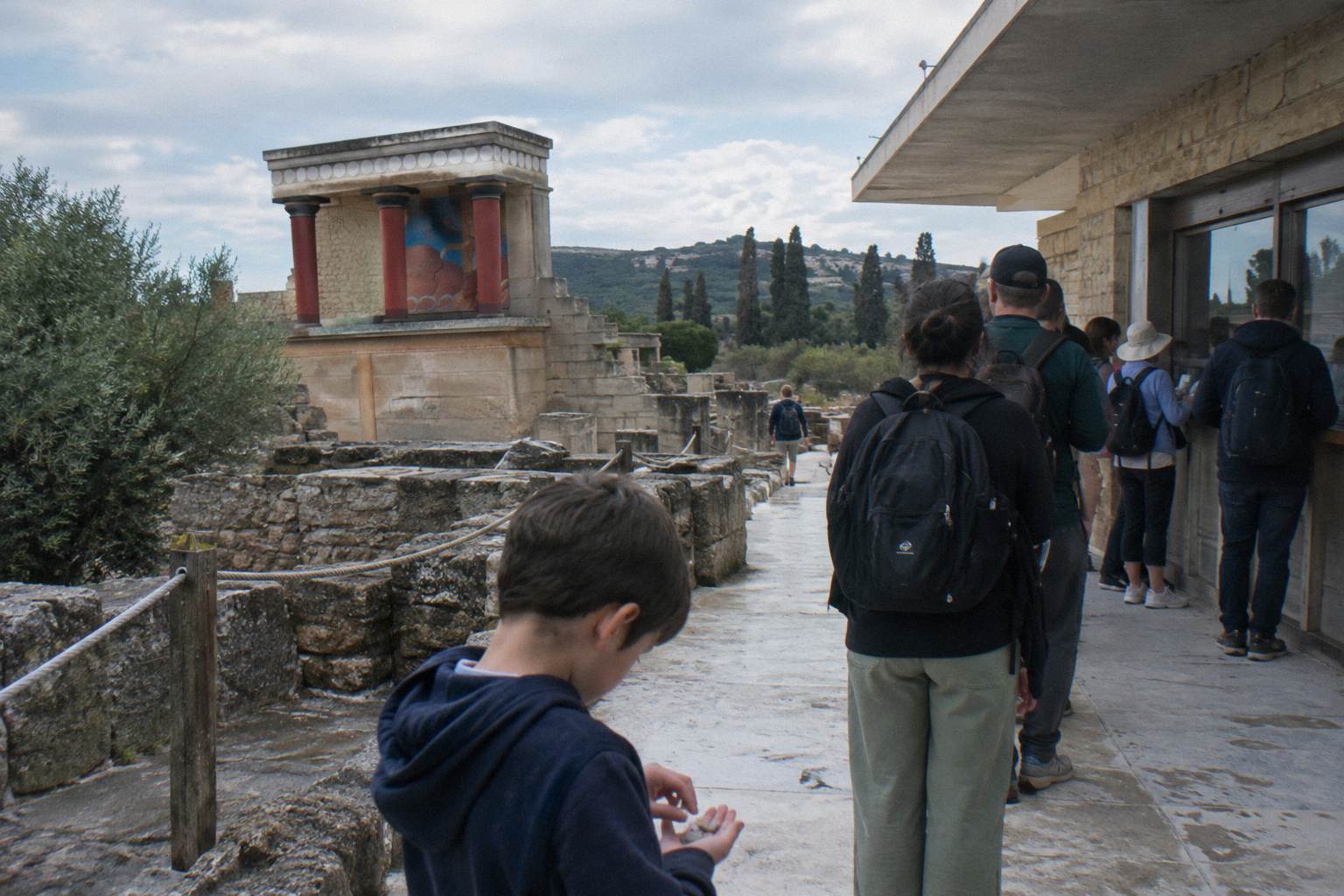
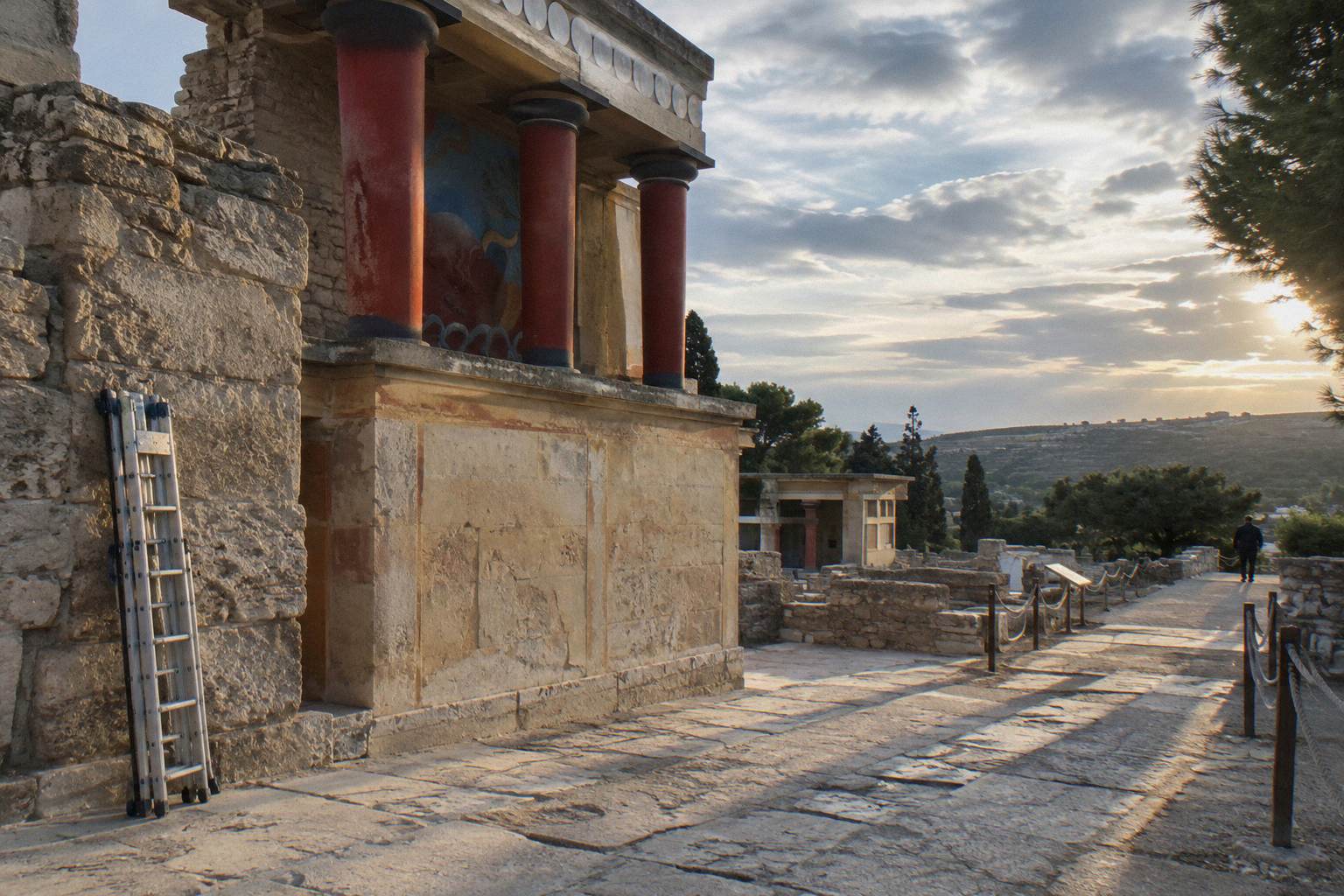
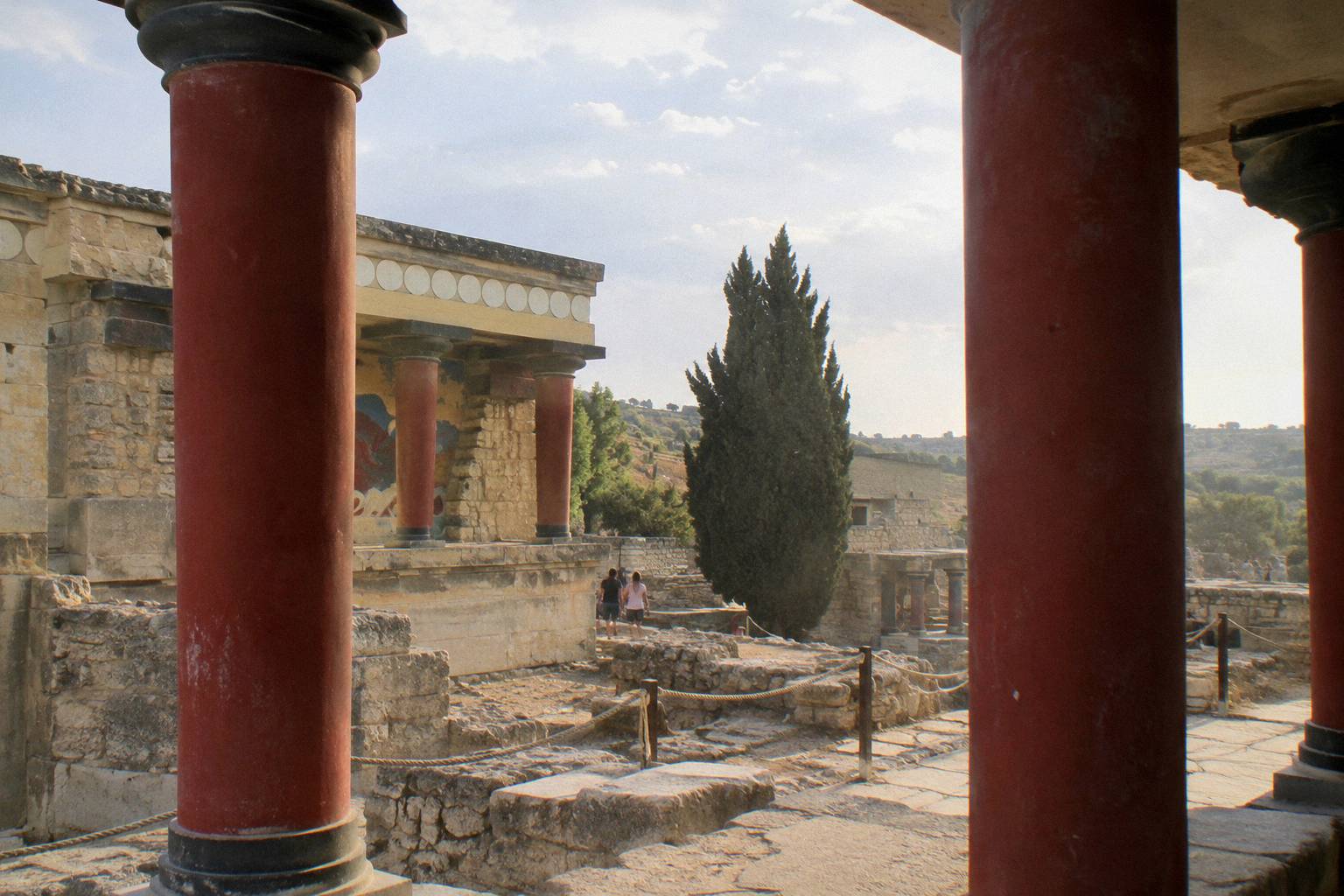
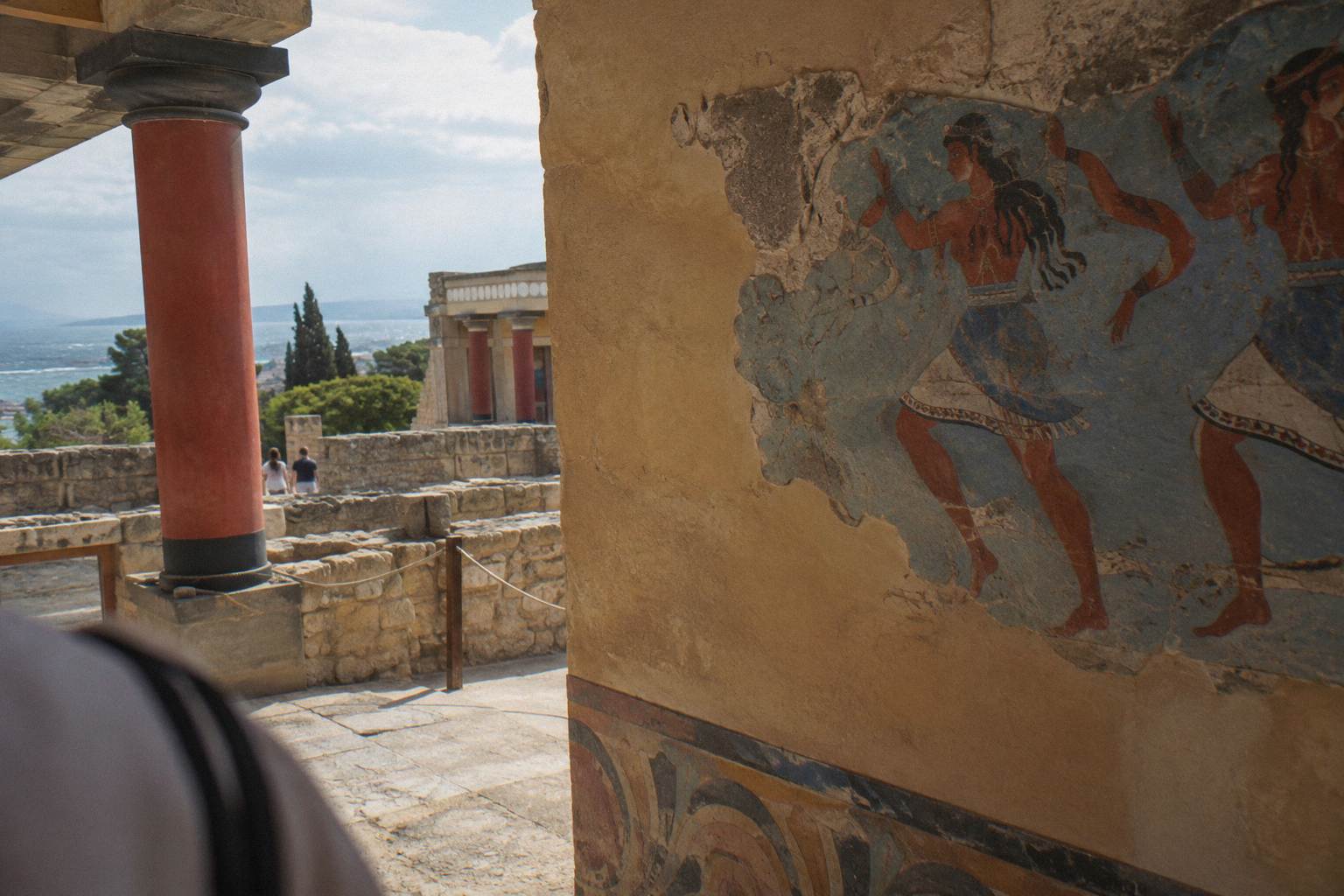
You can see the Central Court, a large paved rectangular court; the Throne Room with its gypsum throne and reconstructed griffin frescoes; the largely reconstructed Grand Staircase; the Queen's Megaron with a dolphin fresco copy; the North Entrance with its replica charging-bull fresco; and the West Magazines with original storage jars. All frescoes on site are generally copies, with the originals in the Heraklion Archaeological Museum.
Start at the centre. The Central Court is the heart of the palace, a broad paved rectangle around which the rest of the building organised itself. From there the named spaces radiate: the Theatral Area, the South Propylaeum, the Royal Road, the long storerooms of the West Magazines where giant clay pithoi, many of them original, still stand in rows.
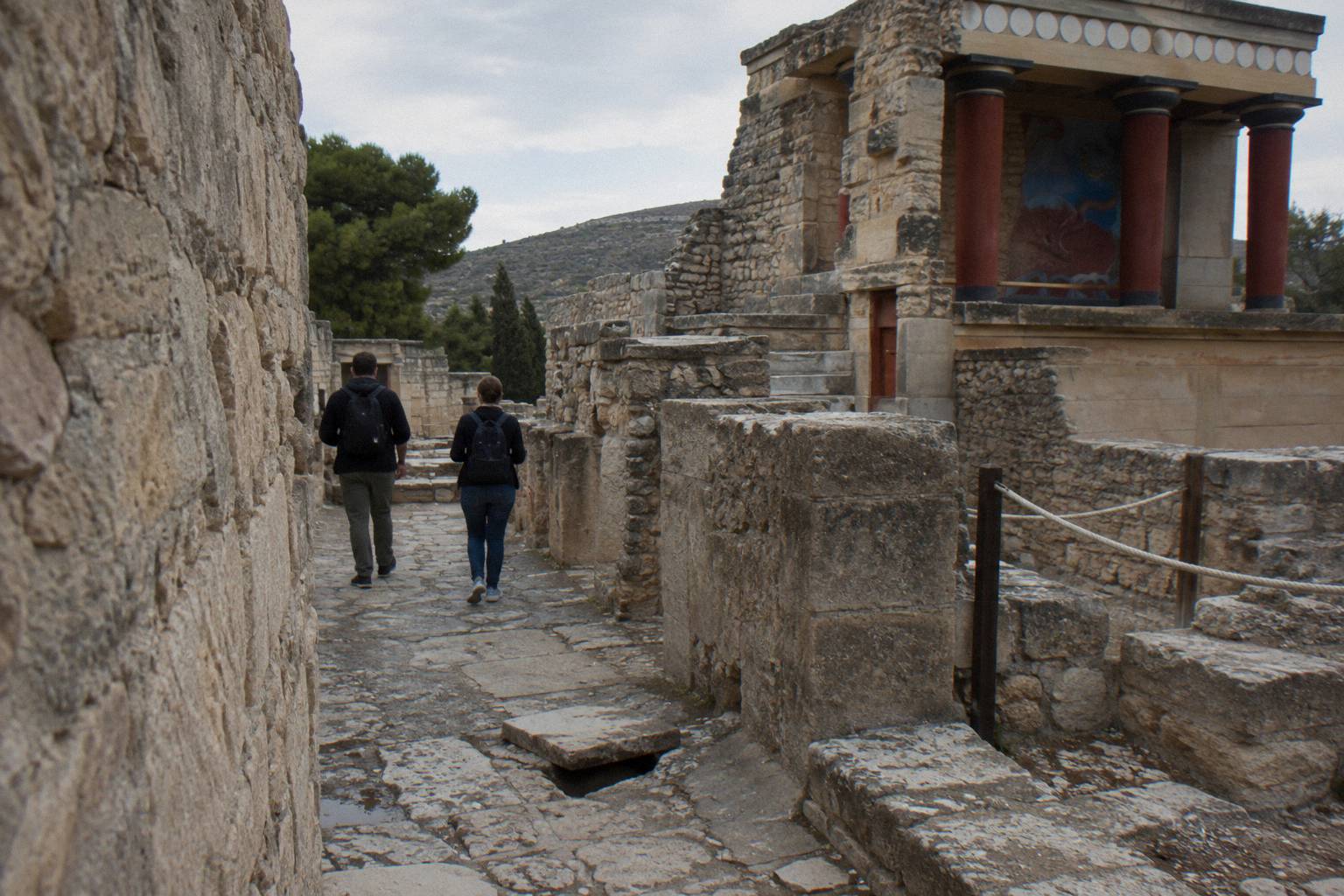
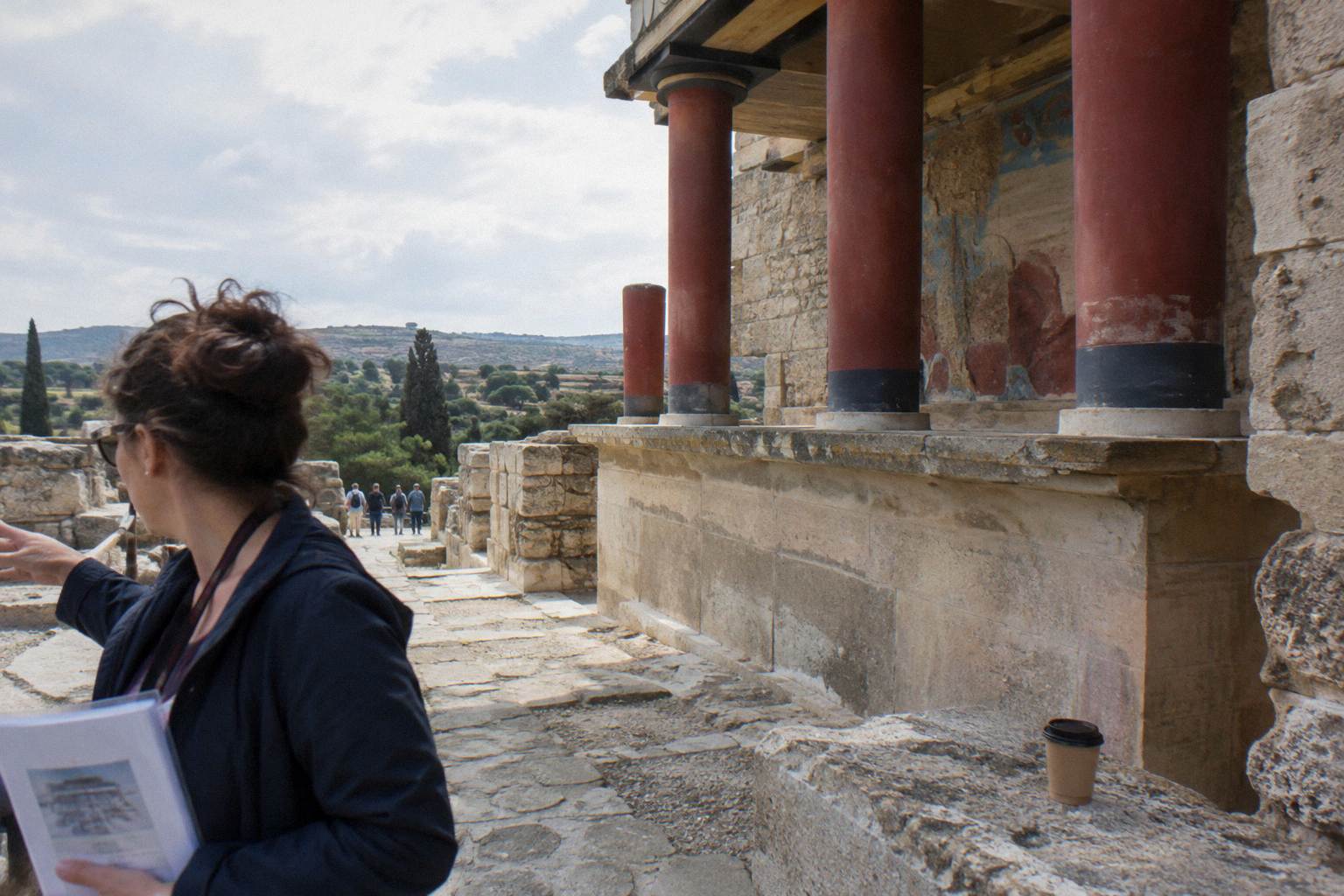
The famous rooms carry a caveat that a licensed guide will usually raise. The Throne Room is small, with a gypsum throne against the wall, benches and a lustral basin, but what it was used for is debated; even the name is Arthur Evans' own interpretation. The Queen's Megaron, likewise, is Evans' label, not an ancient one. Its dolphin fresco is a copy. The Grand Staircase is largely reconstructed, one of the clearest examples of the concrete work that remains controversial and debated, even in Evans' own time.
The bull imagery is where myth and site actually touch. The reconstructed charging-bull fresco at the North Entrance is a replica, and the bull-leaping fragments, the dolphin and the Prince of the Lilies are in the Heraklion Archaeological Museum alongside the Phaistos Disc and the snake goddess figurines. That split is the single most useful thing to know before a visit: the palace gives you the architecture, the museum gives you the art. A trip that covers both is covered in seeing Knossos and the Heraklion Archaeological Museum on one tour.
The table separates what stands on site from what hangs in the museum:
| Feature | On Site At The Palace | Original Or Copy |
|---|---|---|
| Central Court | Yes, large paved rectangular court | Ancient paving |
| Throne Room | Yes, gypsum throne, benches, lustral basin | Throne original; griffin frescoes reconstructed |
| Grand Staircase | Yes | Largely reconstructed |
| Queen's Megaron | Yes | Dolphin fresco is a copy |
| North Entrance | Yes | Charging-bull fresco is a replica |
| West Magazines | Yes, storerooms with pithoi | Many jars original |
| Bull-leaping fresco originals | No, in the Heraklion Archaeological Museum | Originals |
For readers who want both halves in one outing, the "Museum Combo, Small Group" trip builds exactly that day.
That combo runs 5 hours, includes entry tickets for both the palace and the Archaeological Museum with a licensed guide in a small group, and prints from €225 per person with a 4.7 rating across 37 reviews, with transport between the attractions excluded.
How Did The Labyrinth Legend Get Attached To This Building?
Later Greek tradition tied the Minotaur, the Labyrinth and Theseus to the palace layout, most likely because the vast multi-level building struck ancient visitors as maze-like. Archaeology gives the attachment point: people settled the Knossos hill from about 7000 BCE, the first palace rose soon after 1900 BCE, and most of what stands today belongs to the second palace built after an earthquake destroyed the first around 1700 BCE.
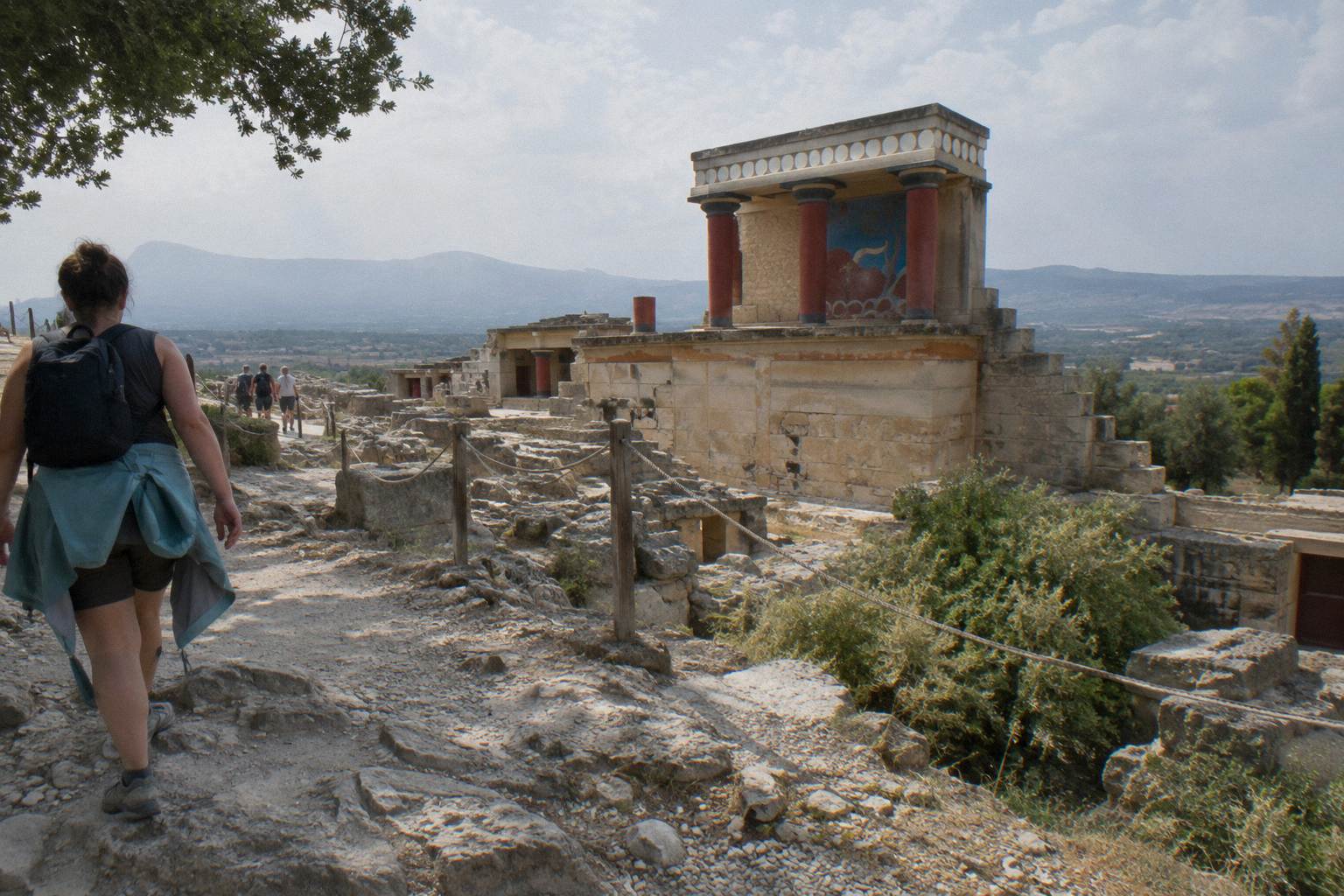
The timeline matters because the myth is younger than the building it explains. Greek storytellers were looking back at an already-ancient ruin, and ruins of that complexity invite stories. The UNESCO listing, which inscribed Knossos in 2025 as one of six components of the "Minoan Palatial Centres" World Heritage Site covering sites dated from 1900 BCE to 1100 BCE, records the association explicitly and frames it as tradition, not history.
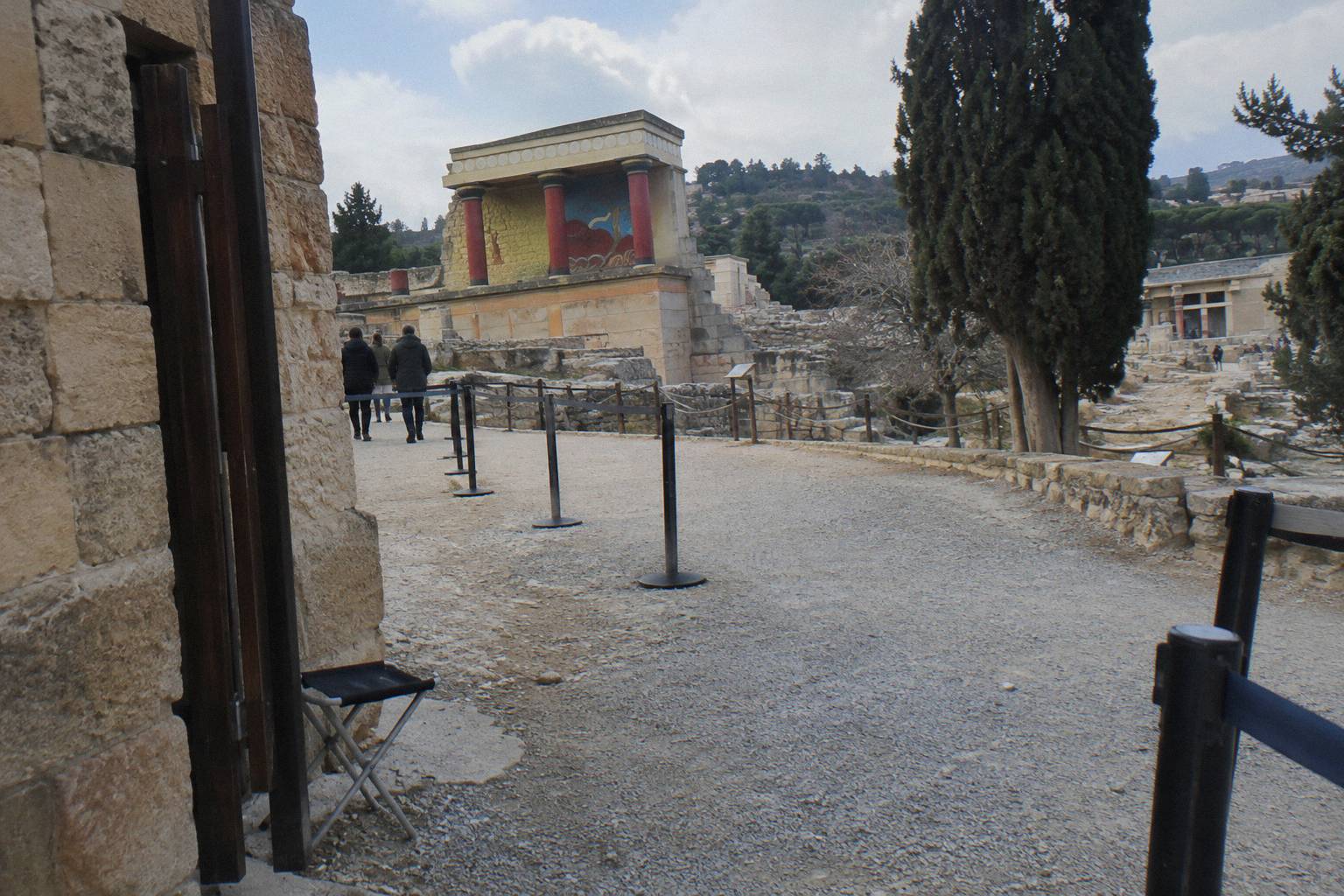
Then came the modern layer. Minos Kalokairinos made the first excavations in 1878, and Arthur Evans began systematic excavation on 23 March 1900. Evans bought the site and donated it to the British School at Athens in 1924. His concrete reconstructions, columns, walls and staircases, were controversial and debated even in his own time, and his room names, Queen's Megaron, Priest-King, Throne Room, are his own interpretations rather than recovered ancient labels. In a sense, Evans added a second labyrinth: a modern interpretive one, where every standing wall asks whether it is Bronze Age or 1900s concrete.
The full story of that debate, including why the reconstructions still divide archaeologists, is covered in why Knossos is controversial, Evans and the reconstructions. It is worth reading before you go, because it changes how you look at the Grand Staircase.
| Era | What Happened | What It Means On Site Today |
|---|---|---|
| About 7000 BCE | Neolithic settlement begins on the Knossos hill | The site was occupied for millennia before the palace |
| Soon after 1900 BCE | First palace built | Its remains sit beneath what visitors see |
| Around 1700 BCE | Earthquake destroys the first palace | Explains the layered ruins |
| After 1700 BCE | Second palace built on top | Most visible remains date from this phase |
| Later Greek tradition | Minotaur, Labyrinth and Theseus attached to the palace | Legend, not archaeology |
| 1878 | Minos Kalokairinos' first excavations | Modern discovery begins |
| 23 March 1900 | Arthur Evans begins systematic excavation | Most of today's layout uncovered |
| 1924 | Evans donates the site to the British School at Athens | The site passes into institutional care |
| 2025 | UNESCO inscribes the "Minoan Palatial Centres" | Knossos gains World Heritage status |
Should The Minotaur Story Change Which Tour You Book?
Only in one practical way: it decides whether you want a licensed guide inside the palace, because the legend cannot be read off the stones by itself. The myth is layered over real architecture and Evans' reconstructions, and separating the three takes interpretation. If that separation matters, book one of the licensed-guide trips; if you only want to stand in the Central Court, a cheaper entry-focused option does the job.
Consider the budget end of the licensed options. "Budget Fare Guided Walk" (from €60 per person, 4.9 across 63 reviews, 1 hour 30 minutes) includes a licensed guide for a small-group tour inside the palace, with the palace entry ticket excluded and paid separately, plus a skip-the-line service on tickets bought by the check-in operator. Run by Business Management Services L.P., it is the lowest-priced way on the trips covered here to get licensed interpretation of exactly the myth-versus-masonry question. Free cancellation applies up to 24 hours before the start.
For the reader who wants the whole day built around the story, "Small Group, Skip The Line" is the closest match, since it puts the licensed guide, the palace ticket and the skip-the-ticket-line service in one €89 per person package with free cancellation up to 24 hours before the start.
That trip, run by Experience Travel Crete, carries a 4.8 rating across 319 reviews, the widest review base of any palace-only trip covered here, and its listing includes a headset when the group is over 6 (7 to 15 pax).
Private parties have their own route to the same guide. The private Knossos tour guide to who it suits explains the pricing logic; the short version for this page is that only some private trips include a licensed palace guide rather than a driver who talks.
That "Private Museum Tour, Per Group" from Acacia Tours includes the professional licensed tourist guide across a 6 to 8 hour private day for up to 7 persons, from €560 per group, with palace and museum entrance paid on site, and it carries 5.0 across 25 reviews.
What Trips People Up When Booking A Knossos Tour?
Three things trip readers up on this route: expecting a labyrinth that does not exist, assuming every guided trip includes the palace ticket, and assuming every driver is a licensed palace guide. Each of the three is per trip on the entries covered here, and each has a cheap fix, which is checking the guide cell and the entrance cell before paying rather than after.
The labyrinth expectation is the first trap. No tour covered here shows a maze, and any picture in your head of walls to get lost in belongs to the myth, not the site. Readers who book the "Ticket With Live Guide" trip for its name get a licensed small-group palace visit, which is the real and better product, but it is not a maze.
The ticket trap bites hardest on the cheap end. "Budget Fare Guided Walk" at €60 per person excludes the palace entry; the €89 trips include it. On the full-day side, nearly every Lasithi and Zeus Cave trip excludes both the palace entrance and the cave ticket. Comparing headline prices without comparing what they cover is the most common booking mistake, and the official Ministry of Culture schedule puts the full palace ticket at €20 with a reduced ticket at €10, so the inclusion gap is a real number, not a rounding error. Opening hours and seasonal changes are covered separately in Knossos opening hours and seasons on a tour day.
The guide trap is subtlest. A driver-guide or driver-host on a private trip is not a licensed palace guide; on those trips a licensed guide is an extra or an option with no figure given anywhere. Readers who care about the legend being interpreted properly should pick a trip whose entry says licensed guide included outright, such as the three palace-only shared trips compared above. The question of what the guide on your trip actually is has its own treatment in is the guide on a Knossos tour licensed or just the driver.
| Trap | The Assumption | The Reality |
|---|---|---|
| The maze | A labyrinth can be visited | Legend only; the palace is a real building with no maze |
| The ticket | Every guided trip includes palace entry | Per trip: the €89 palace trips include it; "Budget Fare Guided Walk" excludes it |
| The guide | Every driver is a licensed palace guide | Per trip: driver-guides on private trips; a licensed guide is an extra or option there |
The Myth Ends At The Gate, The Palace Doesn't
The Minotaur never lived at Knossos and Theseus never sailed home from it, but the building the legend attached itself to is real, vast and mostly from the second palace built after 1700 BCE. Walking it with a licensed guide turns a name on a booking page into an afternoon you understand, and the trips above cover that at from €60 per person.
That is the whole bargain of the place. Knossos Greece Tours covers the palace visits that turn the story into a visit. The legend draws people in; the Central Court, the Throne Room and the West Magazines are what they remember. Which of the three licensed shared trips fits comes down to price, timing and whether the ticket should be bundled.
For the reader who wants the myth handled on site by someone licensed to interpret it, these are the trips to compare before booking.
Common Questions About The Labyrinth Of Knossos
Is There A Real Labyrinth At Knossos?
No. The Labyrinth is legend, linked by later Greek tradition to the palace's maze-like layout. Archaeology has found palace rooms, courts and storerooms, not a maze, and no tour visits one.
Did The Minotaur Exist?
The Minotaur is myth: a creature part man and part bull from the Theseus story. It is framed as legend and never as a fact about the site. The bull imagery you can really see includes the replica charging-bull fresco at the North Entrance.
Which Tour Has Labyrinth In Its Name?
"Ticket With Live Guide" carries "labyrinth" in its listing name. It is a 1 hour 30 minute licensed small-group palace visit from €89 per person with the entry ticket included, not a maze tour.
What Can You Actually See At The Palace?
The Central Court, the Throne Room with its gypsum throne, the largely reconstructed Grand Staircase, the Queen's Megaron with a dolphin fresco copy, the West Magazines with original pithoi, and replica frescoes; the originals are in the Heraklion Archaeological Museum.
Do Guides Tell The Minotaur Story On Tours?
Guides on the trips covered here are named only by each trip's own entry: licensed guides on the shared palace trips, driver-guides on some private options. The myth is a story told about the palace, and licensed interpretation is included outright only where the trip entry says so.
Why Is The Palace Layout Linked To The Labyrinth Myth?
Later Greek tradition associated the sprawling, multi-level building with the maze of the Minotaur story. The UNESCO inscription for the Minoan Palatial Centres records the association as tradition, not history.