Is Knossos Or Phaistos Better?
What Knossos and Phaistos share as parts of the 2025 UNESCO Minoan Palatial Centres inscription, where the Phaistos Disc sits today, and what the Knossos trips covered here add to the comparison.
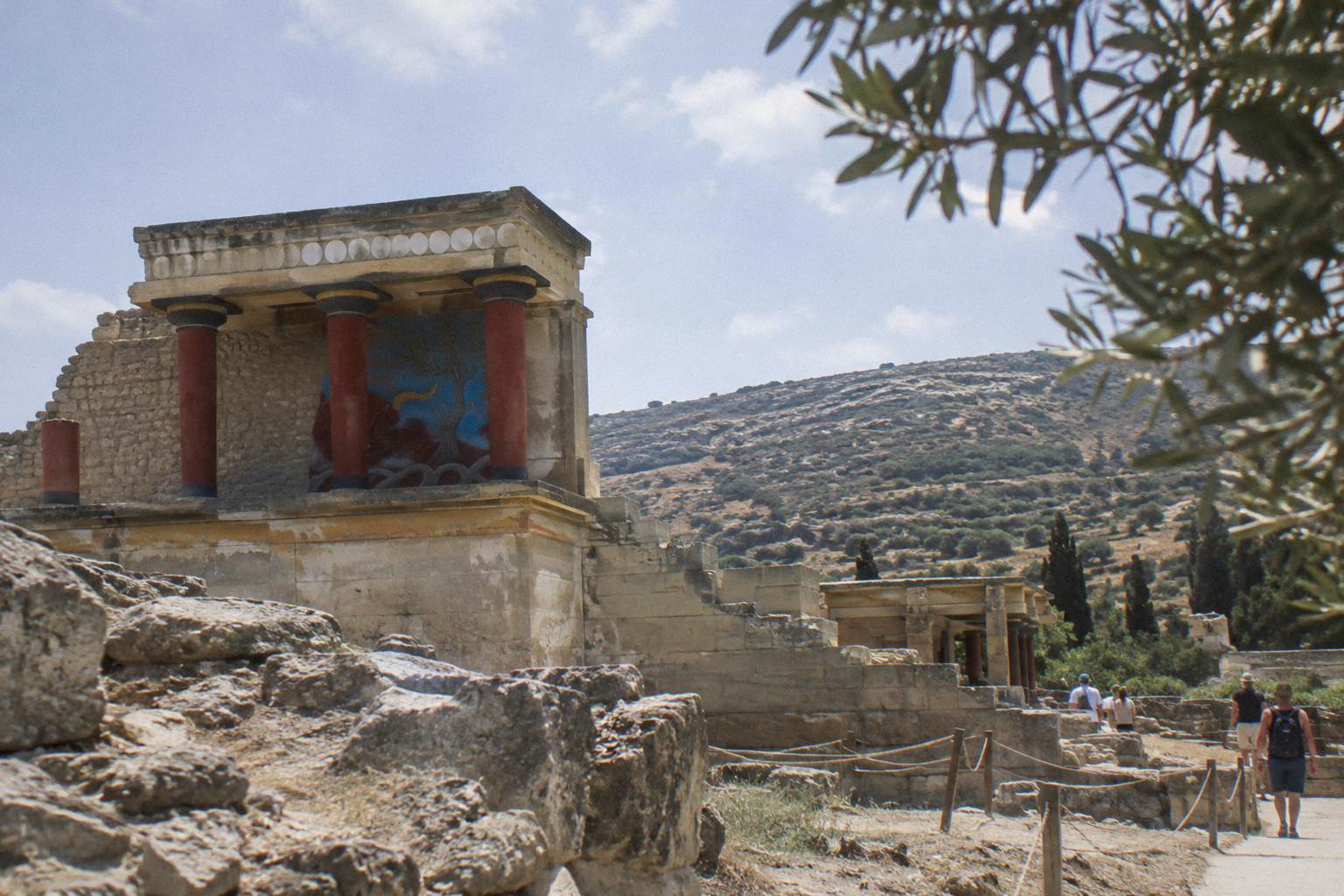
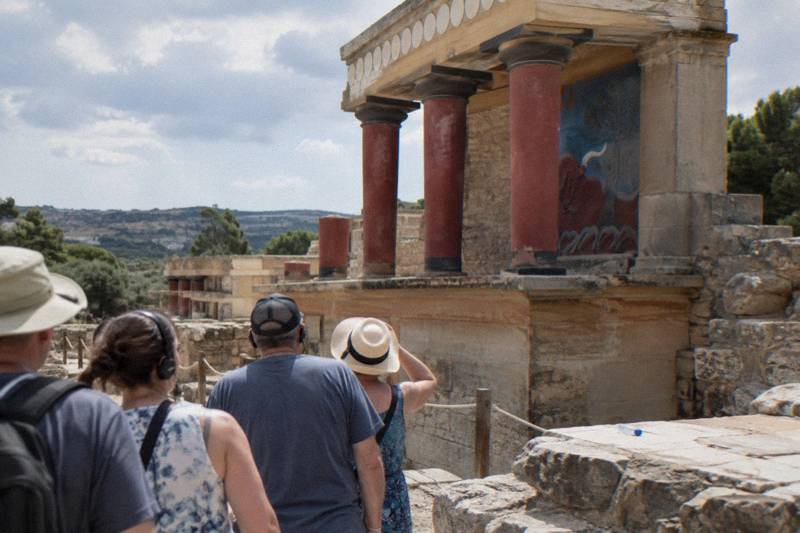
Both palaces belong to the same 2025 UNESCO inscription, the Minoan Palatial Centres, so the question is not which site matters more but which one a trip can actually reach. Every trip covered here visits the Palace of Knossos, about 5 km south of Heraklion, and none of them is led by Phaistos. A Phaistos visit therefore needs its own arrangements.
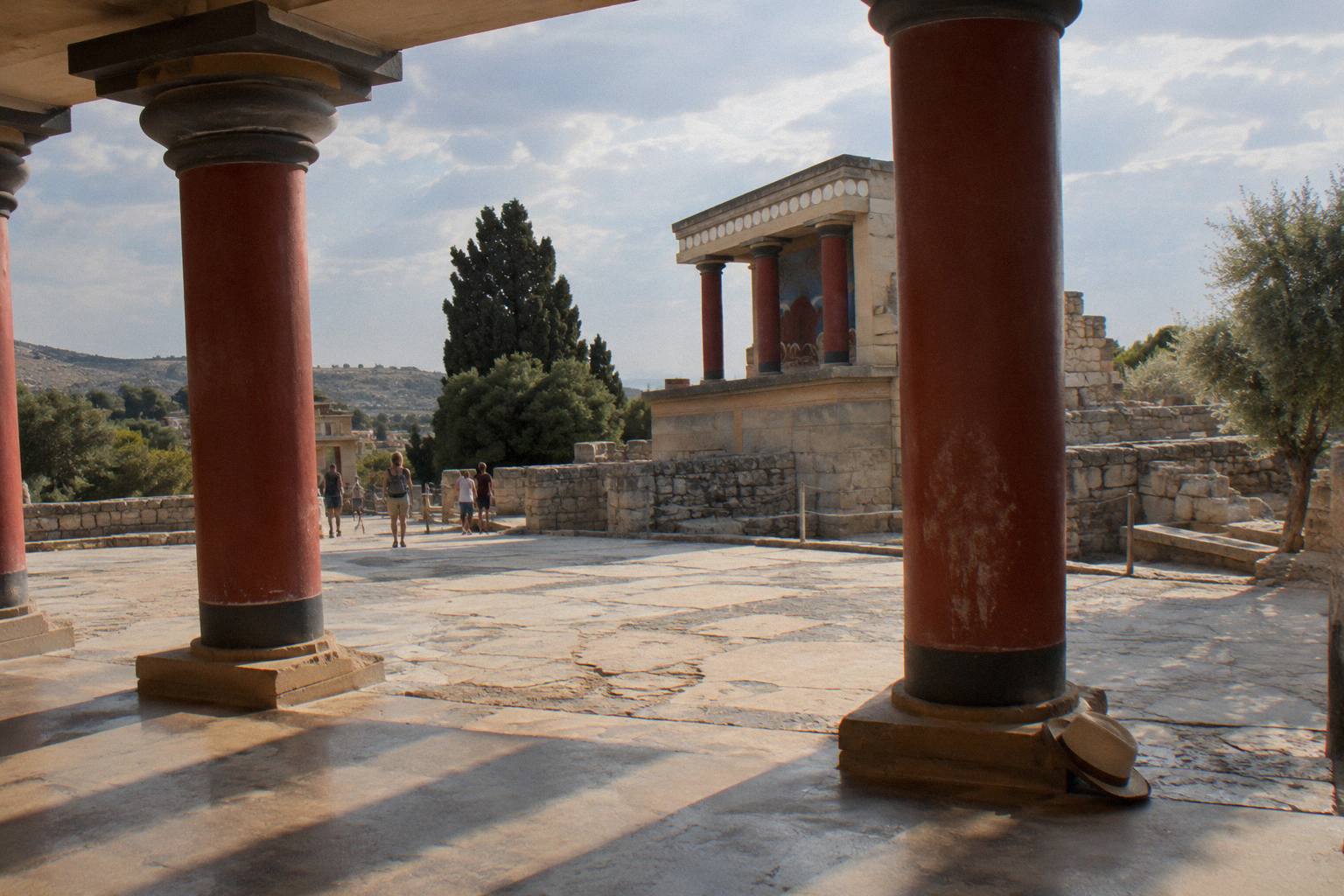
The honest starting point for the comparison is the shared honour. Knossos and Phaistos are two of the six components of the UNESCO World Heritage Site inscribed in 2025, alongside Malia, Zakros, Zominthos and Kydonia in Chania. The inscription covers sites dated from 1900 BCE to 1100 BCE, which places both palaces inside the same Minoan story: the first palaces rose soon after 1900 BCE, and what visitors walk through at Knossos today mostly belongs to the second palace, built after an earthquake destroyed the first around 1700 BCE. Anyone telling you one palace is the real one and the other a footnote is arguing against the UNESCO list itself, which treats them as parts of a single heritage landscape.
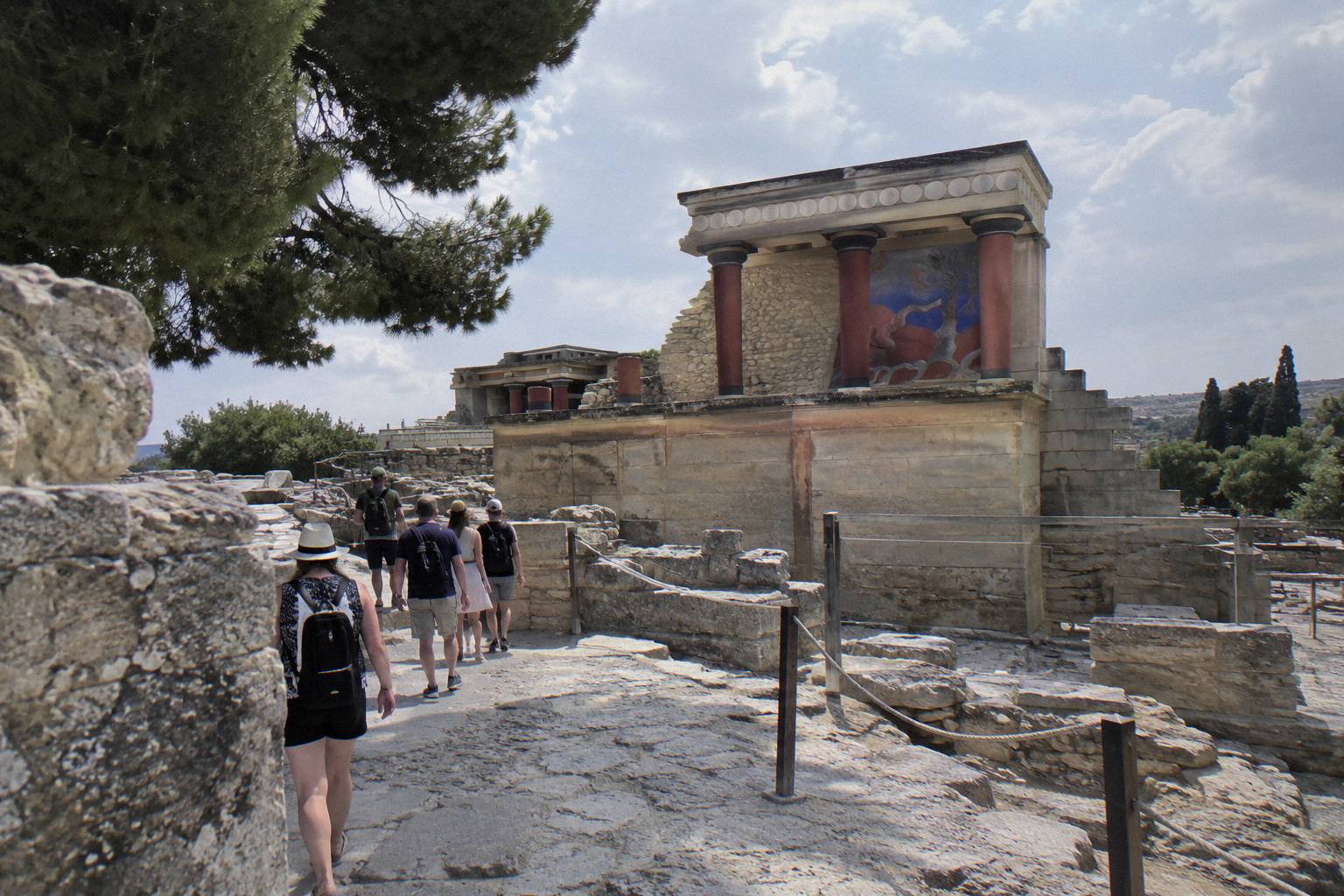
Where the two sites part company is practical rather than historical. Knossos sits about 5 km south of Heraklion city, usually 10 to 15 minutes away by car or taxi, and Heraklion is the base of almost every trip covered here. That proximity is why a traveller staying in or near Heraklion can be standing in the Central Court within half an hour of leaving the hotel, on any of the shared small-group walks, the coach days or the private options. Phaistos lies further afield, and no verified opening hours, ticket price, drive time or visit duration for it appears here, because the trips covered here do not go there. A Phaistos day is a self-arranged day.
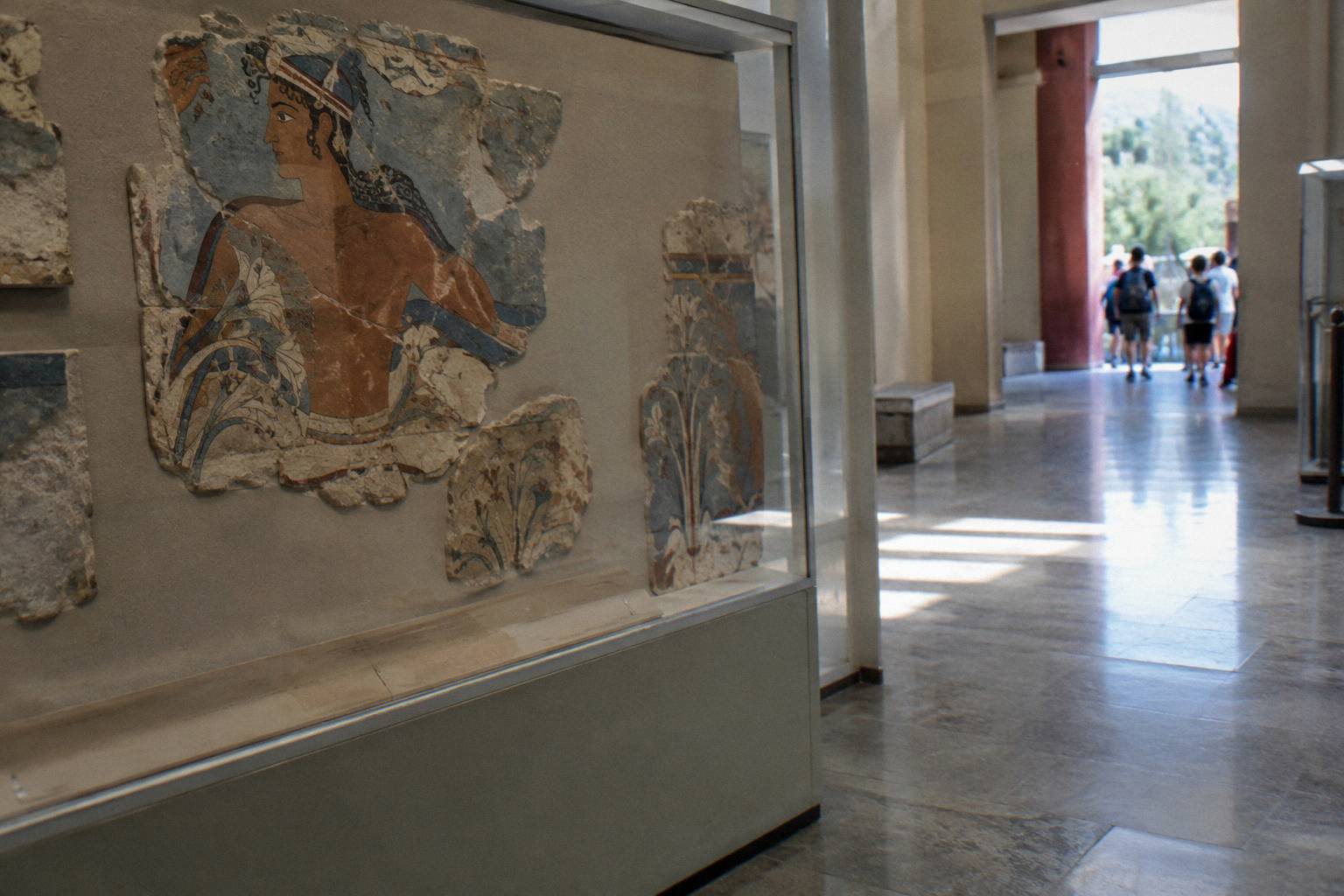
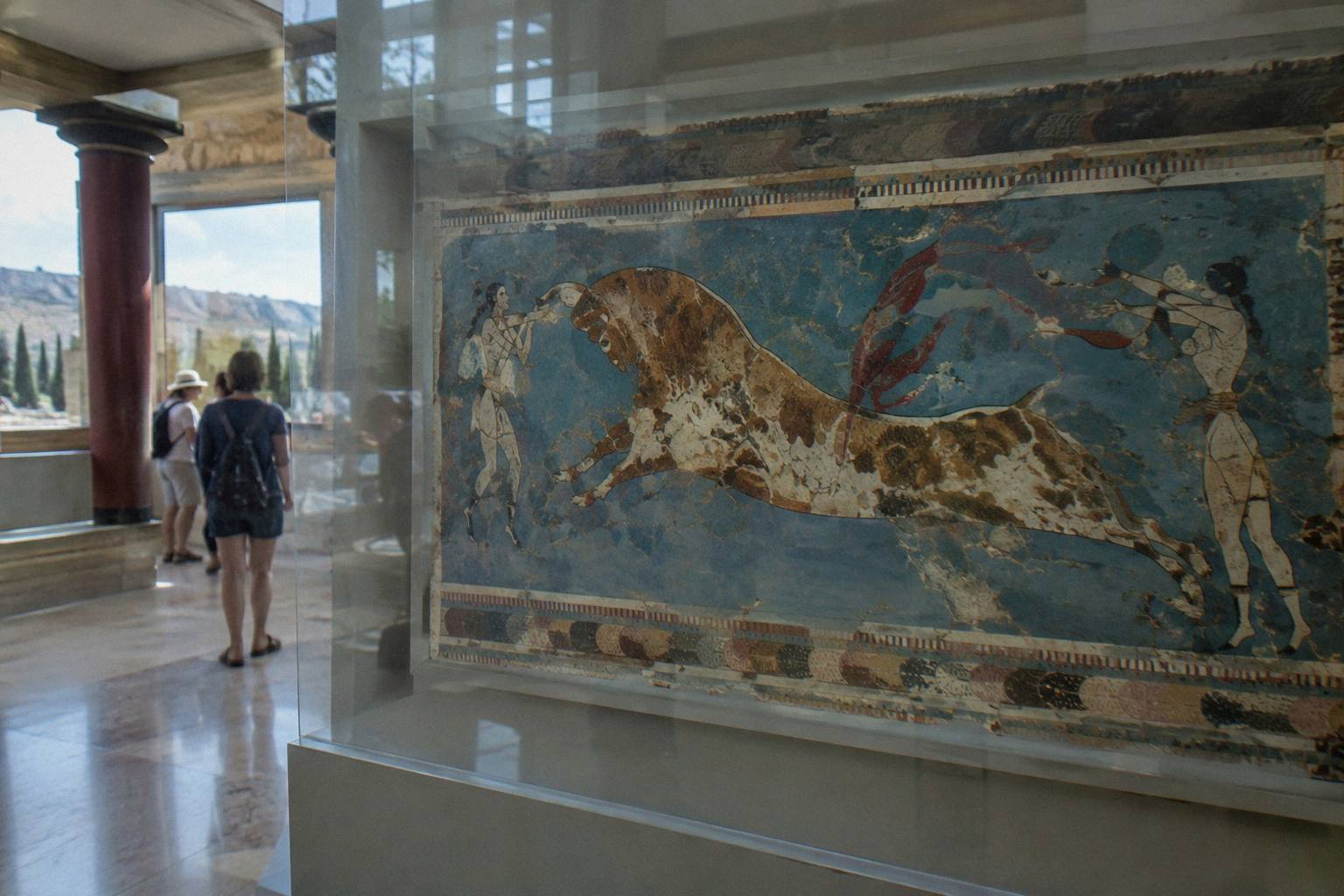
There is a second asymmetry worth naming before the trips below enter the picture: the finds. The Phaistos Disc, the most famous object associated with either palace, is not at Phaistos. It sits in the Heraklion Archaeological Museum, together with the bull-leaping fresco and the snake goddess figurines, in the same building that holds the originals of the Knossos frescoes. A traveller who cares about Phaistos as much as Knossos may find that the single most Phaistos-connected thing to do on a Crete trip is a museum stop in Heraklion, and one small-group trip here bundles exactly that: palace and museum entry tickets together.
The trips below are the three most useful shapes for a Knossos day from that starting point: a short guided visit with the ticket handled, a palace-plus-museum combination, and a full day that adds the Lasithi Plateau and the Cave of Zeus.
What Knossos Adds Through The Trips Covered Here?
Knossos is reachable on a ninety-minute guided walk, a museum combination or a full Lasithi day, with prices from €33 per person on the budget coach day up to from €225 per person for the small-group palace and museum visit. Every one of those shapes includes the palace itself. The Small Group, Skip The Line trip is the tightest version, from €89 per person, with the ticket handled and a licensed guide inside.
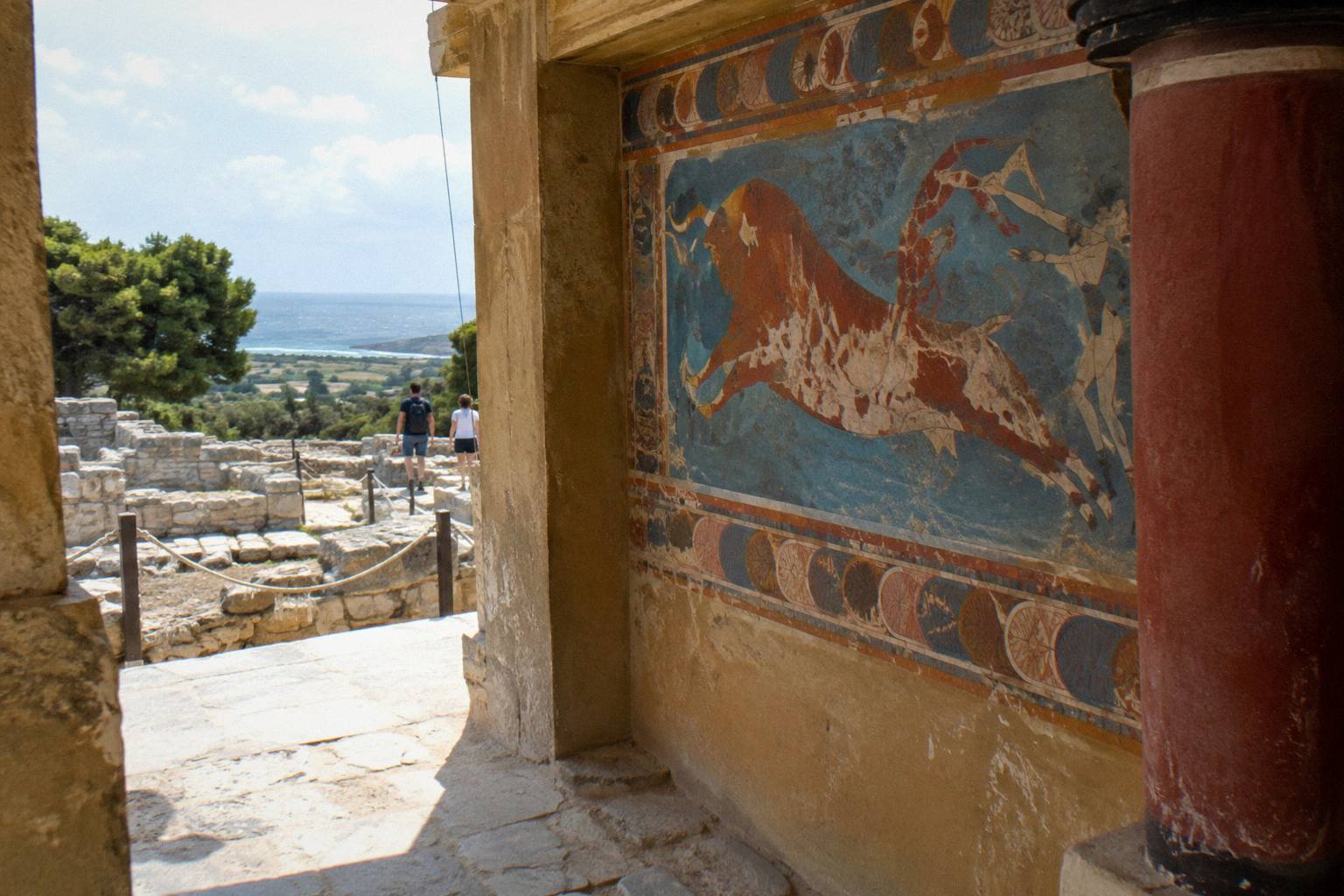
The trips covered here, taken together, are the answer to what Knossos offers that Phaistos currently cannot match: choice. There are shared small-group palace walks of 1 hour 30 minutes with a licensed guide inside and the entry ticket included. There are coach days that pair the palace with Heraklion and its old market, private van days that pair it with the Lasithi Plateau, and wine, olive oil and pottery variations that hang a tasting or a workshop onto the palace visit. The Phaistos side of the ledger has the site and the Disc, both remarkable; the Knossos side has the site, the Disc's museum, and a full day-trip network around the gate.
Take the shapes one at a time. The shortest is the palace-only visit: "Small Group, Skip The Line" (4.8 across 319 reviews, from €89 per person), "Ticket With Live Guide" (4.6 across 78 reviews, from €89 per person), "KnossosGuides, Ticket Included" (4.9 across 48 reviews, from €89 per person) and the "Early Morning Entry" trip (from €89 per person) all run 1 hour 30 minutes with a licensed tour guide leading a small group inside the palace and the entry ticket included. The "Budget Fare Guided Walk" (4.9 across 63 reviews, from €60 per person) covers the same ground at the palace but leaves the general admission to be paid separately, which is why its price sits lower. Then the day broadens: the "Museum Combo, Small Group" (4.7 across 37 reviews, from €225 per person) adds the Heraklion Archaeological Museum with both entry tickets included over 5 hours, and the Lasithi trips stretch the day to 7 hours or more with the Cave of Zeus, villages and an olive oil stop.
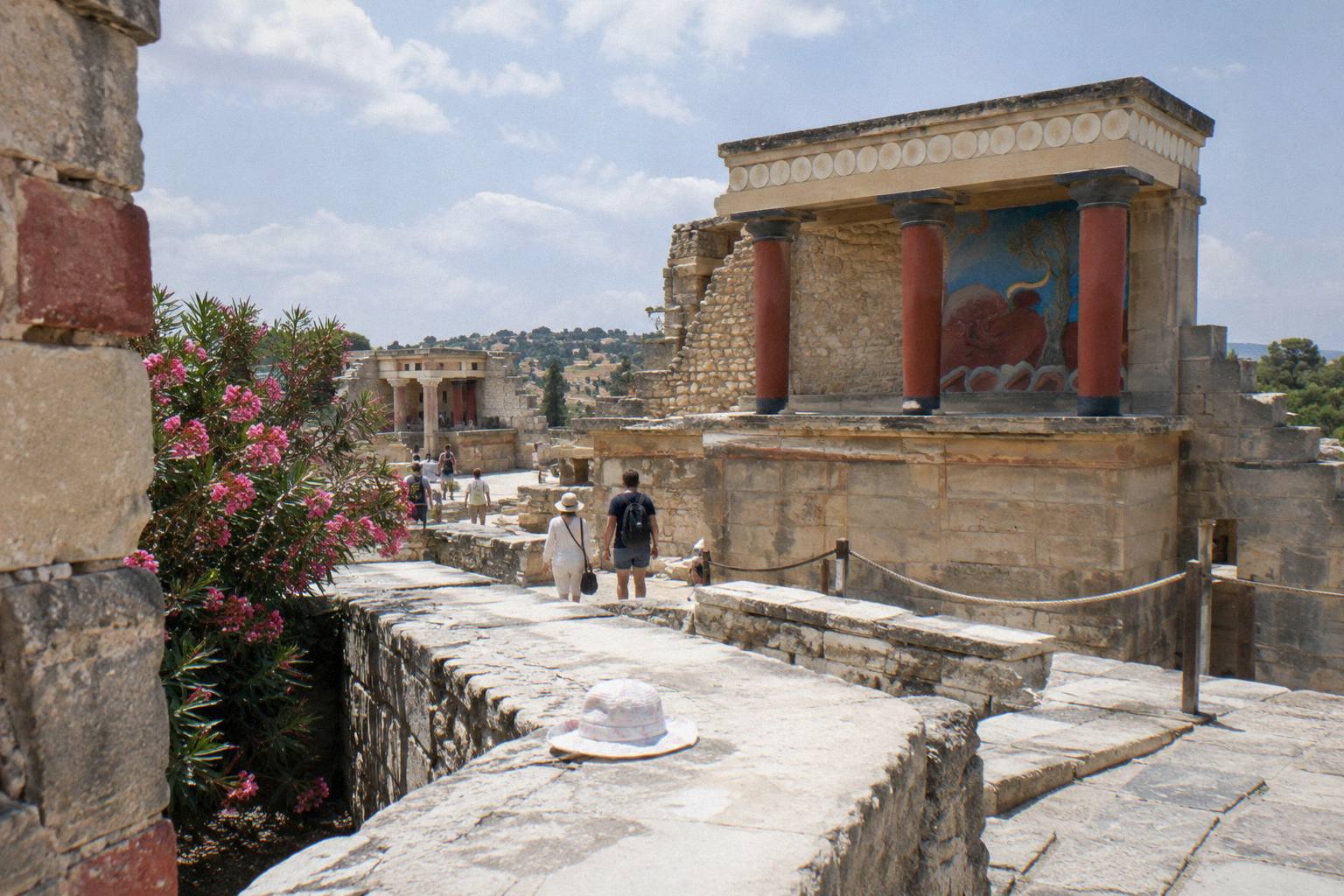
The Small Group, Skip The Line trip deserves its own word here because it is the version most first-time visitors settle on: the ticket is included, the skip-the-ticket-line service is included, the guide inside the palace is licensed, and groups over 6 people get headsets so the guide carries to the back of the group. Cancellation is free up to 24 hours before the start. You can check availability for your date before comparing it with the longer days below.
Between the ninety-minute walks and the ten-hour private days sits a middle band of half-day and full-day combinations, and this is where the museum question gets settled. The table below maps the main trip shapes to what they include at the palace and the museum, using only what each trip's own entry says.
| Trip | Duration | Palace Entry | Heraklion Archaeological Museum | From |
|---|---|---|---|---|
| Small Group, Skip The Line | 1 hour 30 minutes | Included | Optional add-on | €89 per person |
| Ticket With Live Guide | 1 hour 30 minutes | Included | Optional add-on | €89 per person |
| Budget Fare Guided Walk | 1 hour 30 minutes | Excluded, paid separately | Not part of the trip | €60 per person |
| Museum Combo, Small Group | 5 hours | Included | Included | €225 per person |
| Budget 8-Hour Coach Tour | 8 hours | Excluded | Excluded | €33 per person |
| Old Market City Tour | 6 hours to 7 hours | Excluded | Optional add-on | €40 per person |
| Certified Guide City Tour | 6 hours to 7 hours | Excluded | Not part of the trip | €46 per person |
| Knossos and wine day with tasting | 6 hours to 7 hours | Excluded | Not part of the trip | €105 per person |
Read the museum column carefully if the Disc is part of why you are comparing the two palaces. Only the Museum Combo includes the museum ticket outright; three of the short guided walks offer the museum as an optional add-on; the city-tour trips leave it out or offer it as an option. The pattern for anyone weighing Knossos against Phaistos is that the museum, where the Phaistos Disc actually lives, is the one stop that touches both worlds, and it is a bus or taxi ride from the palace rather than a second long expedition.
If a palace-and-museum day sounds like the right shape, the question of whether the price holds up is covered in whether a Knossos and museum tour covers enough, which walks the same combinations in more detail.
What The Two Palaces Share In The UNESCO Inscription?
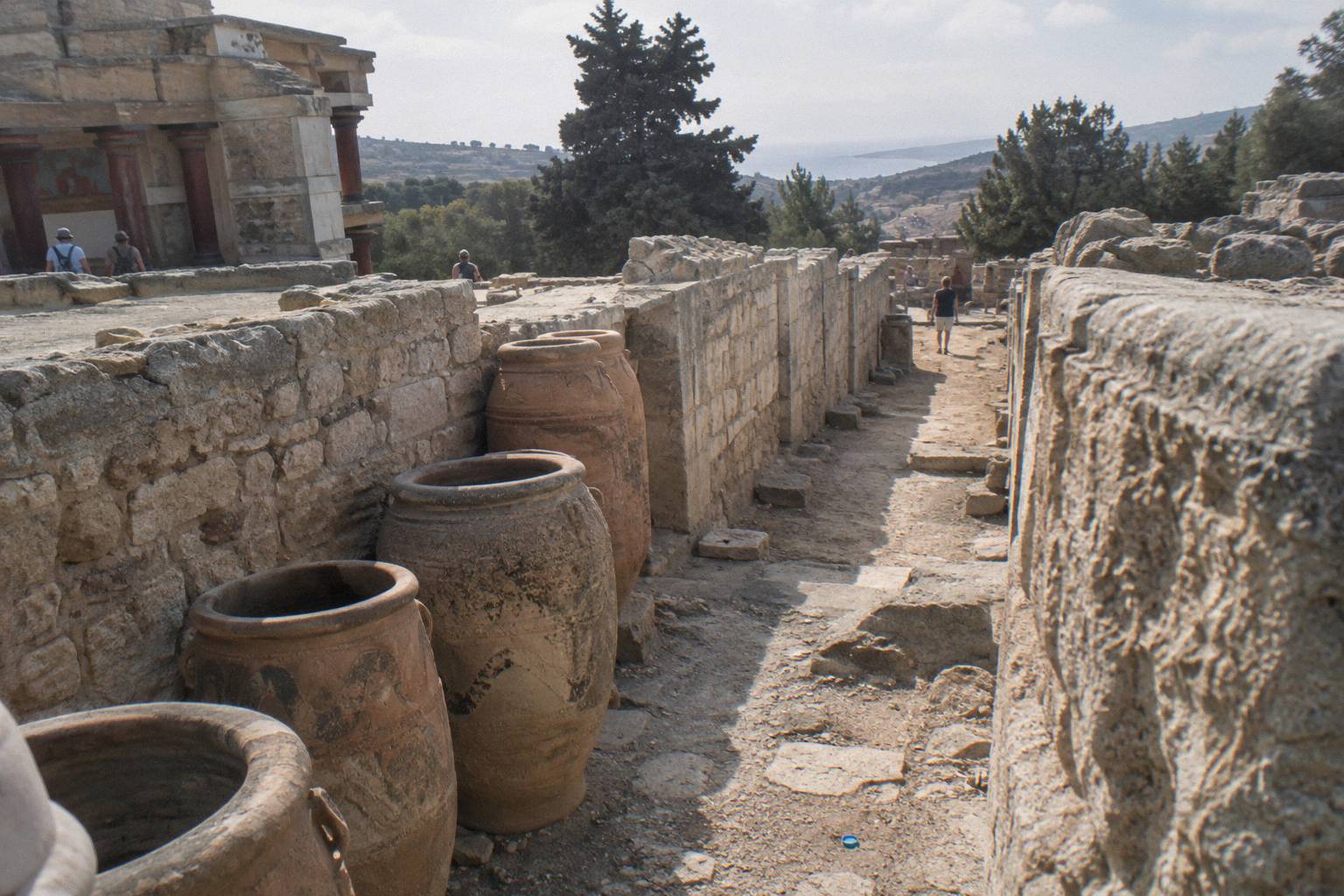
Knossos and Phaistos are two of six components of one World Heritage Site, the Minoan Palatial Centres, inscribed in 2025 together with Malia, Zakros, Zominthos and Kydonia in Chania. The inscription covers sites dated from 1900 BCE to 1100 BCE. That framing puts the two palaces in one sentence before any comparison of crowds, ruins or access begins.
The shared history runs deeper than a single inscription line. People settled the Knossos hill in the Neolithic period, from about 7000 BCE, and the first palace was built soon after 1900 BCE before an earthquake destroyed it around 1700 BCE; a second palace rose on top, and most of what visitors see today belongs to that second building. Phaistos, Malia and Zakros belong to the same palatial world, the network of centres that the UNESCO citation treats as one civilisation's achievement rather than a set of rival attractions.
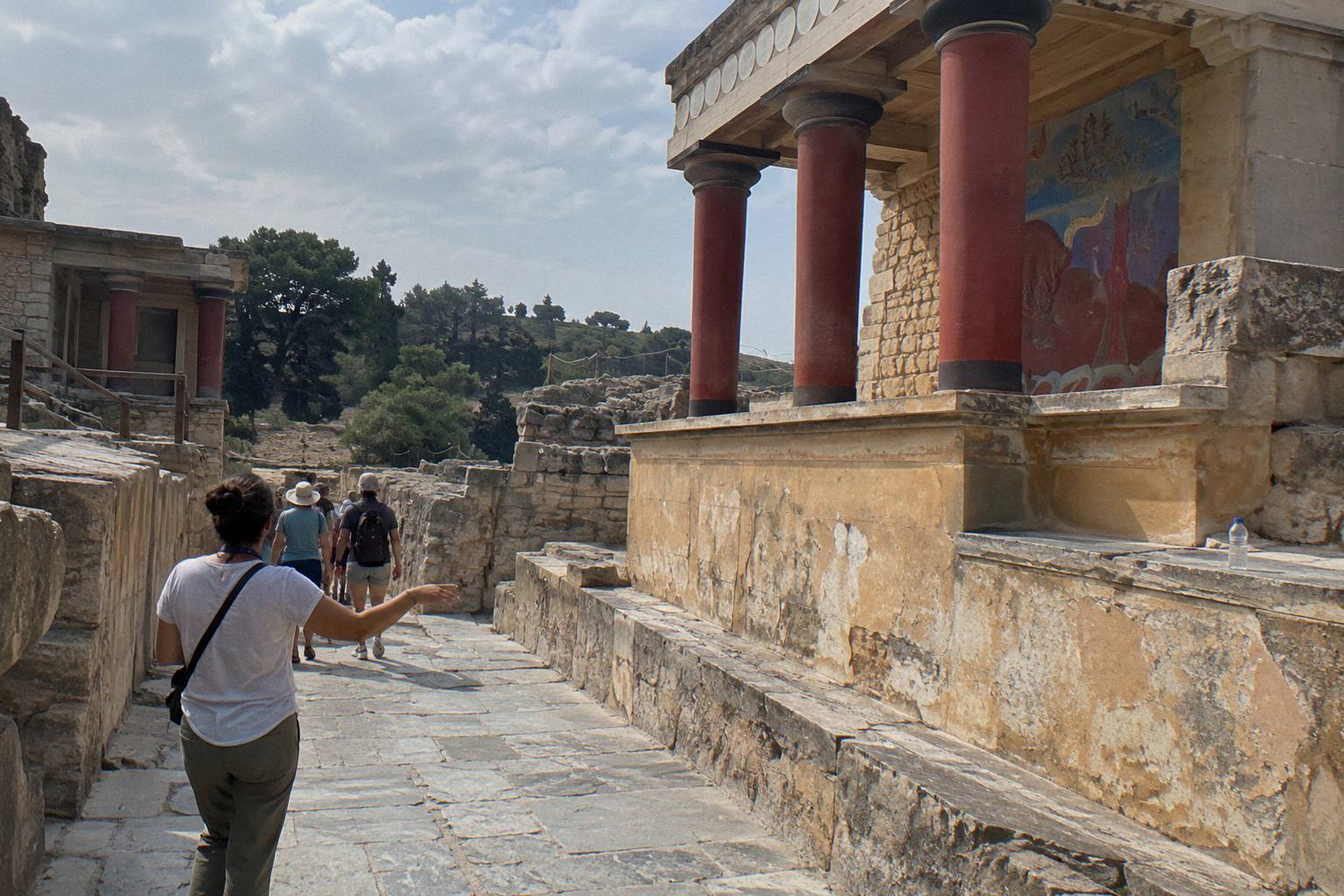
This matters for the comparison because the usual framing, Knossos versus Phaistos, is backwards. The question the inscription answers is what the Minoan palatial centres achieved together; the question a traveller actually faces is narrower: which palace can be visited on the time and transport available. And on that narrower question the answer on this island is lopsided: the entire trip offering covered here, more than thirty products from shared walks to private ten-hour days, runs to Knossos and only Knossos.
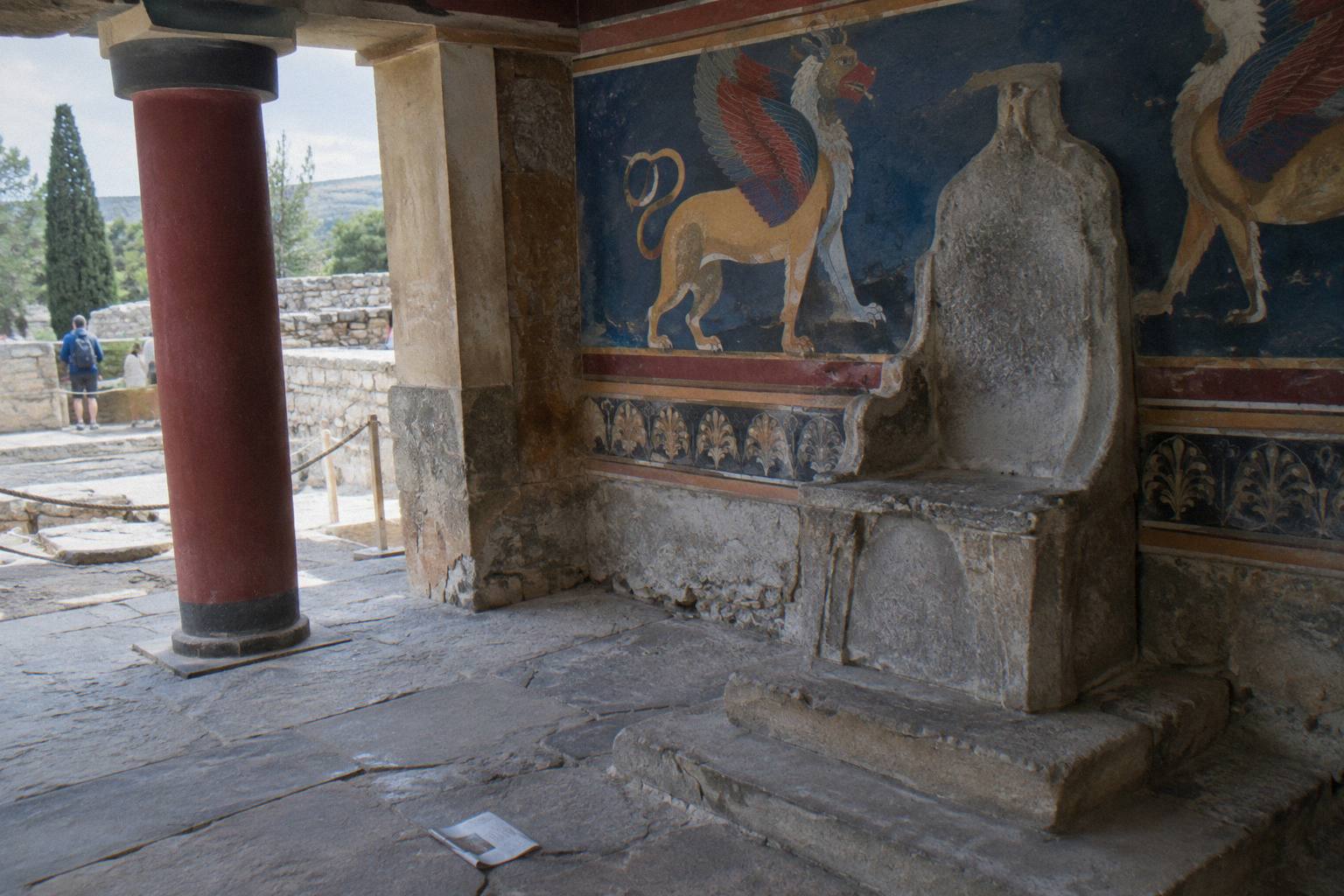
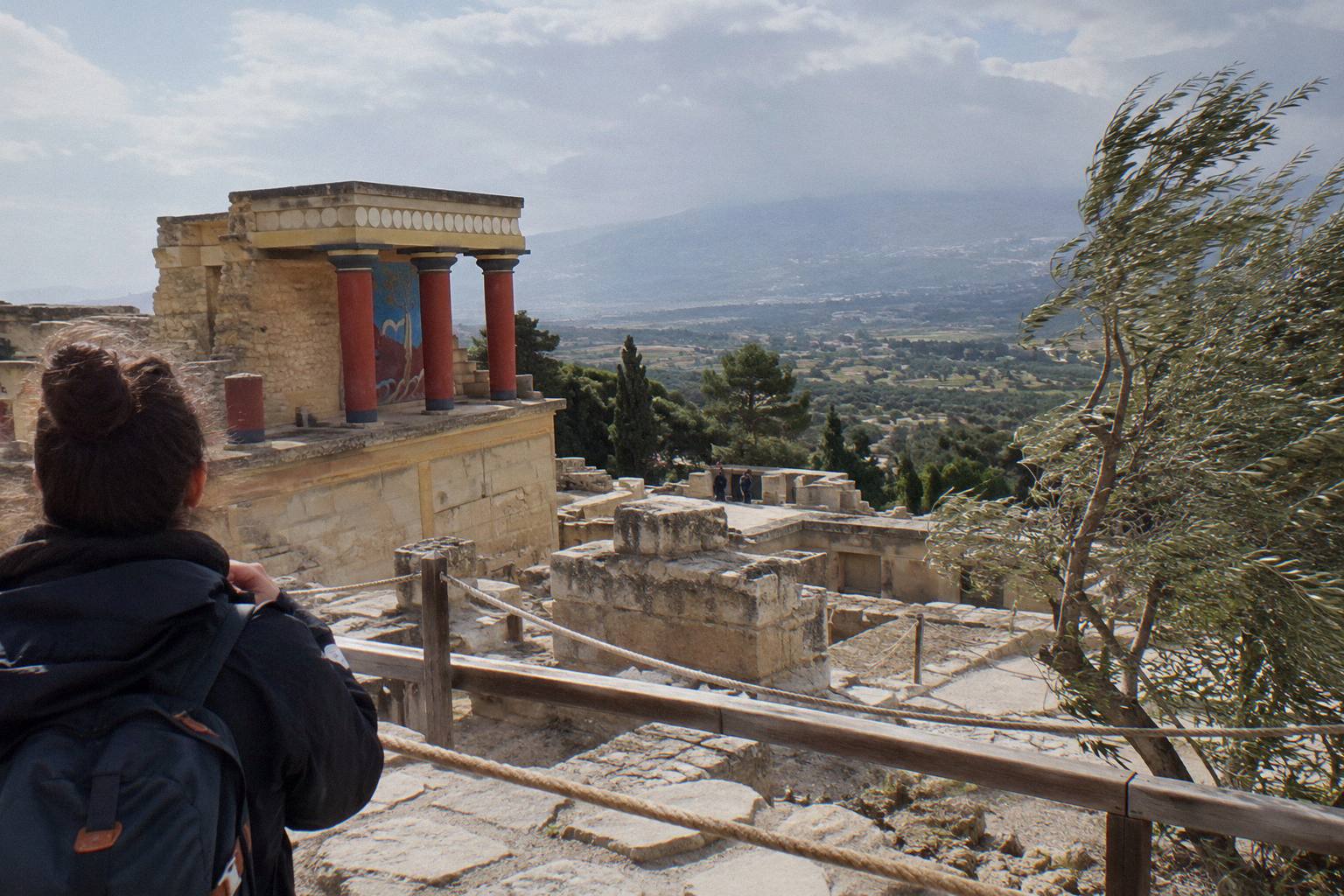
The excavation histories diverge too, and the divergence explains much of what each site feels like today. At Knossos, Minos Kalokairinos made the first excavations in 1878, and Arthur Evans began systematic excavation on 23 March 1900, later buying the site and donating it to the British School at Athens in 1924. Evans' concrete reconstructions, the columns, walls and staircases that give Knossos its raised, walkable character, are controversial and debated, even in his own time. A site left un-reconstructed reads differently from one partly rebuilt, and much of the enduring Knossos-versus-Phaistos argument is really an argument about whether Evans' reconstructions help or hurt. The background to that debate is covered in why Evans and the reconstructions remain controversial.
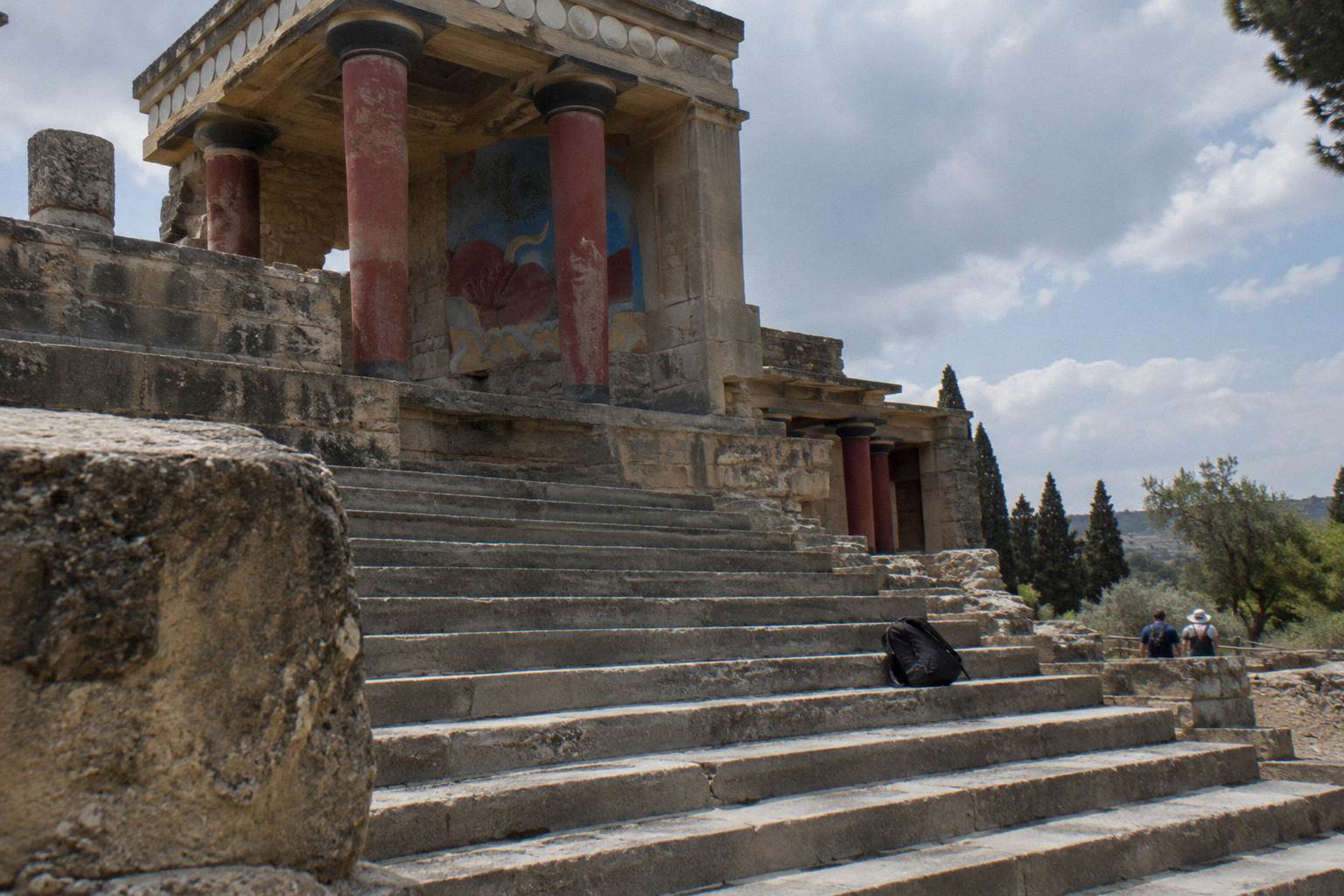
What the shared inscription also means is that neither choice is a wrong one in heritage terms. A day at Knossos is a day at a UNESCO component. A self-arranged day at Phaistos is the same. The difference is entirely in the support around the visit: guides, tickets handled in advance, and the museum that ties both palaces together.
Where Is The Phaistos Disc, And Why Does That Matter?
The Phaistos Disc is in the Heraklion Archaeological Museum in Heraklion city, alongside the bull-leaping fresco and the snake goddess figurines, not at Phaistos itself. That single fact quietly reshapes the comparison: a traveller based in Heraklion can encounter the most famous object of the Phaistos story on the same day as the palace of Knossos.
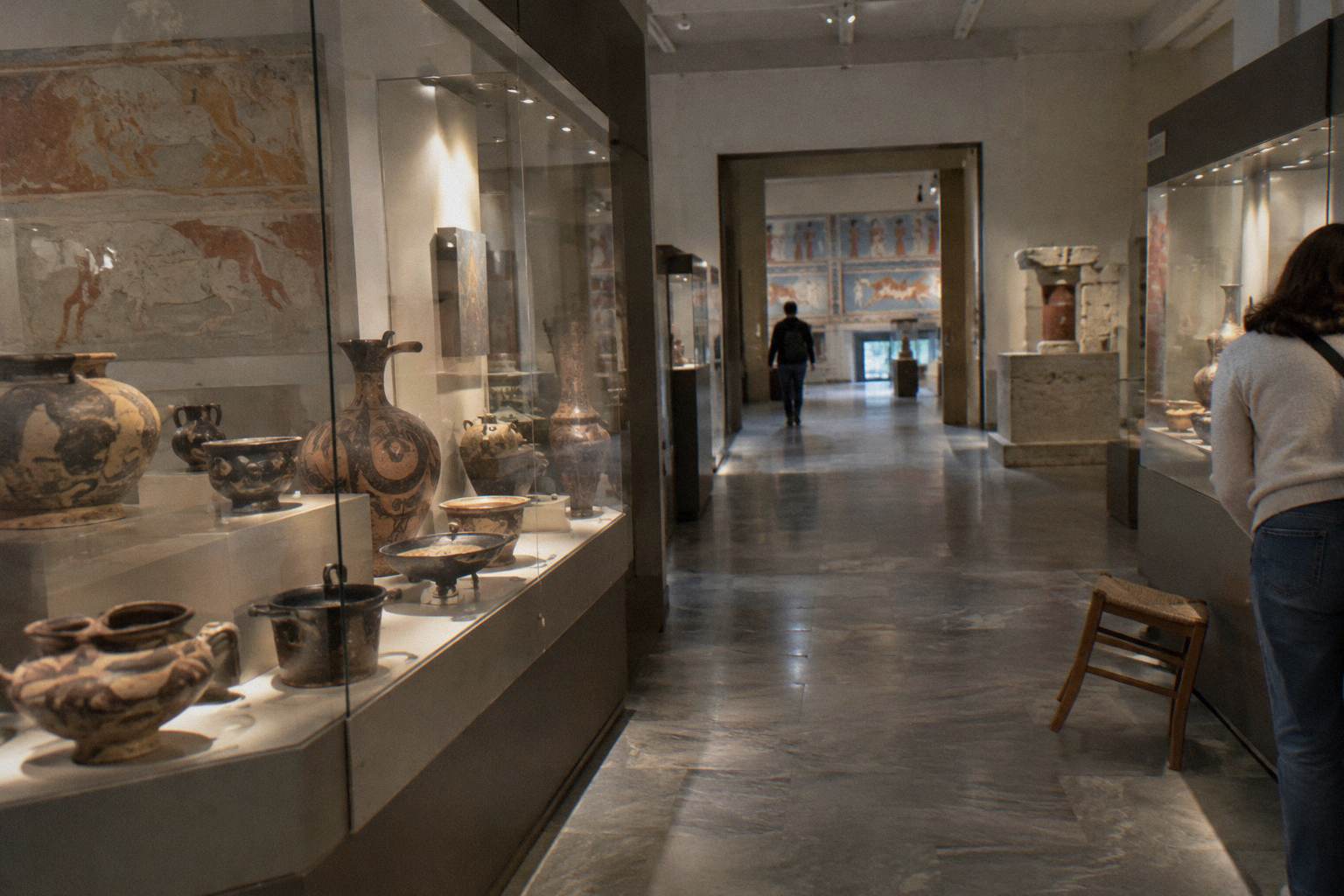
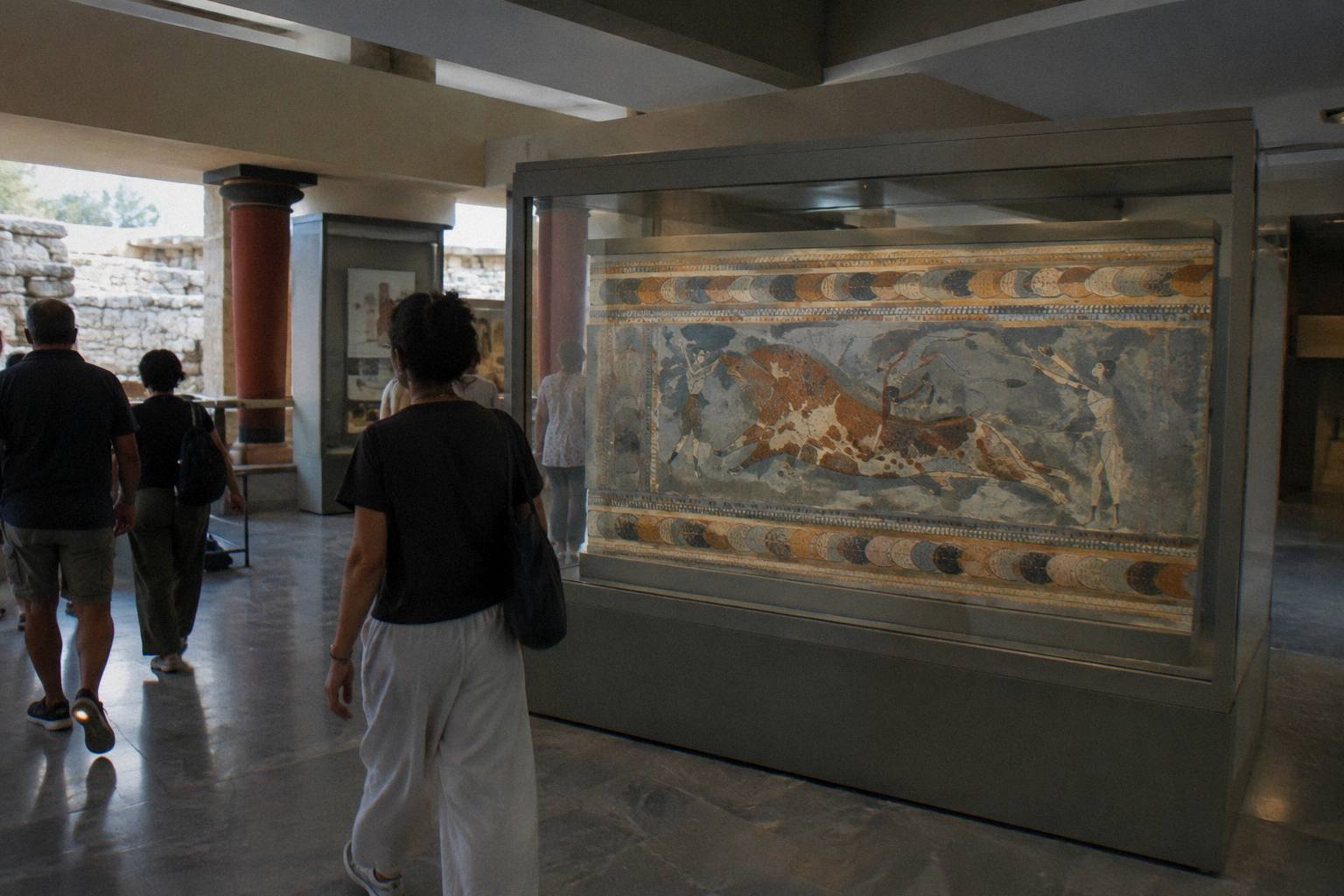
The museum is where the two palaces meet in practice. It holds the Minoan finds from across the island, the Phaistos Disc among them, and it also holds the originals of the Knossos frescoes: the frescoes seen on site at the palace are generally copies, with the bull-leaping, dolphin and Prince of the Lilies fragments kept in the museum. So a combined palace-and-museum day at Heraklion delivers the Knossos ruins and the Phaistos Disc in one outing, which no trip to either palace alone can do. The rest of the planning pages sit on Knossos Greece Tours.
That is the logic behind the Museum Combo, Small Group trip: 5 hours, a licensed guide for a guided tour in a small group, entry tickets for both the palace and the Archaeological Museum included, skip-the-ticket-line service included, from €225 per person, holding 4.7 across 37 reviews. Transport to and from the attractions is excluded, so the day suits a traveller already staying in or near Heraklion. For anyone weighing the two palaces, it is the one product here that touches both stories in a single booking.
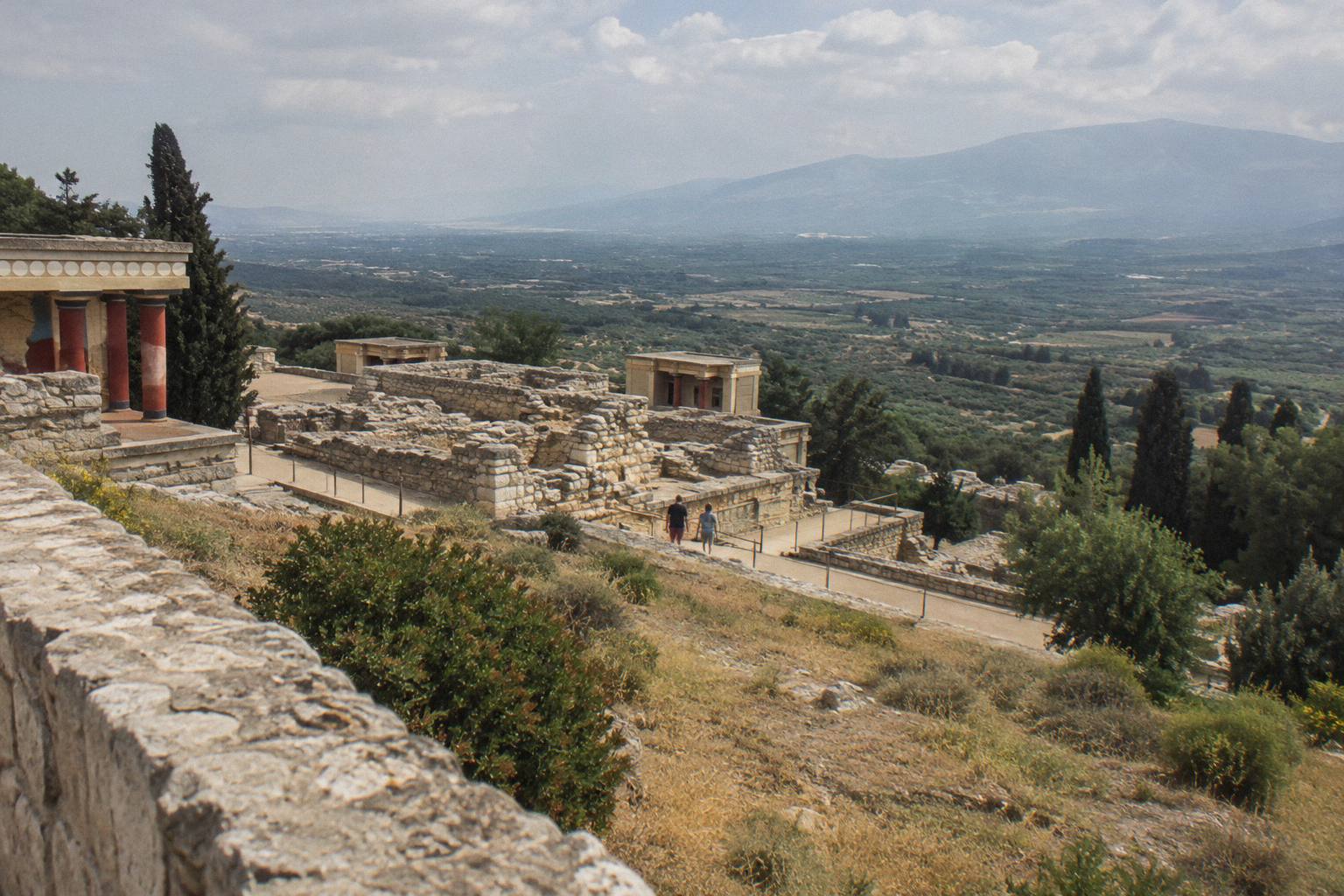
No trip covered here claims to show any particular object in the museum, and none goes to Phaistos, so the Disc is encountered on a museum visit rather than at the site it came from. The shorter guided walks offer the museum as an optional add-on for travellers who want to build the same pairing themselves around a ninety-minute palace visit. How much time the palace itself deserves is a separate question, covered in how long to spend at Knossos Palace.
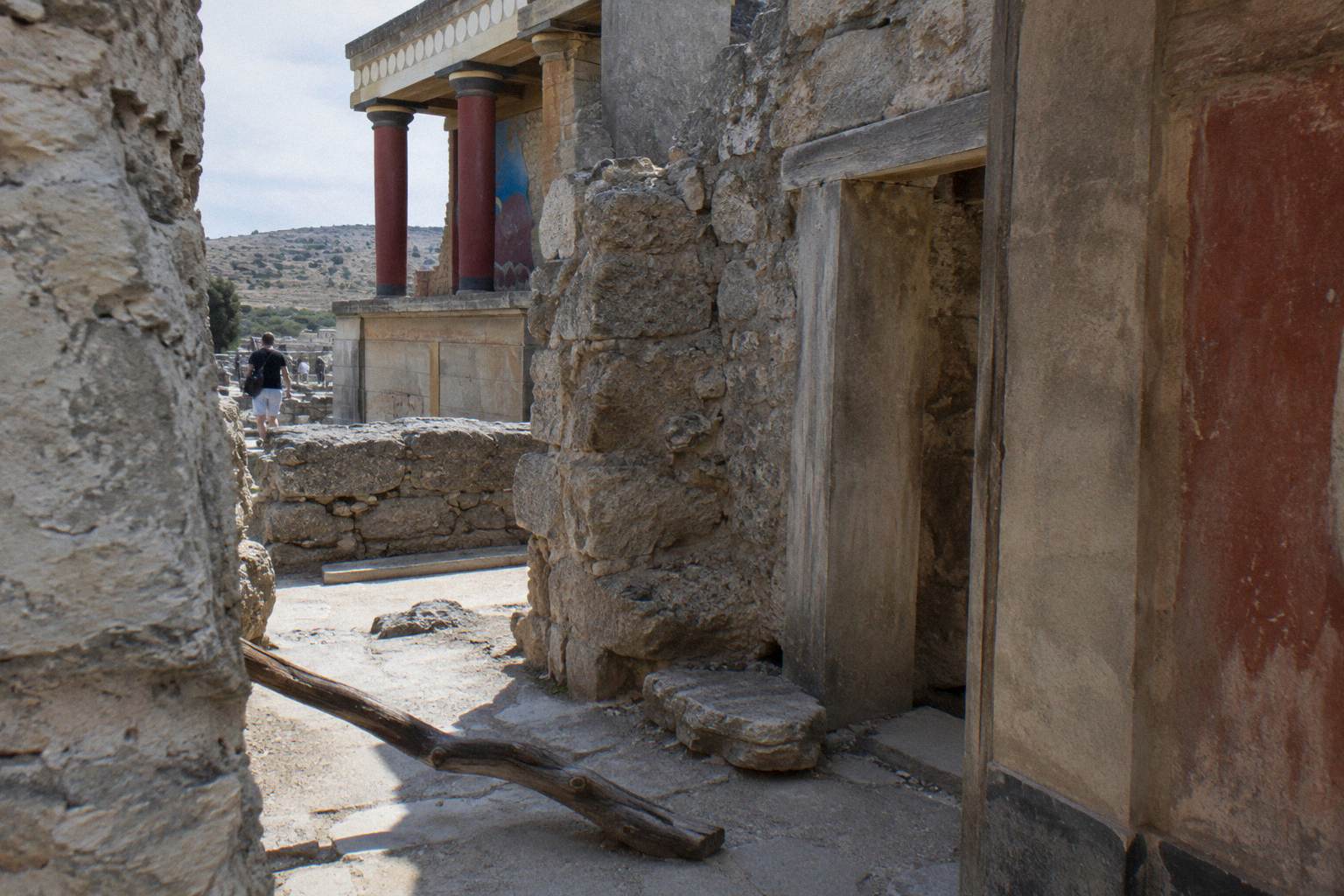
How Would A Phaistos Visit Actually Get Arranged?
No trip covered here is led by Phaistos or Gortyna, and no Phaistos opening hours, ticket price, drive time or visit duration has been verified here, so none is given. A Phaistos visit needs its own arrangements, made directly with the site and with your own transport. A Knossos visit, by contrast, can be booked as a complete handled day.
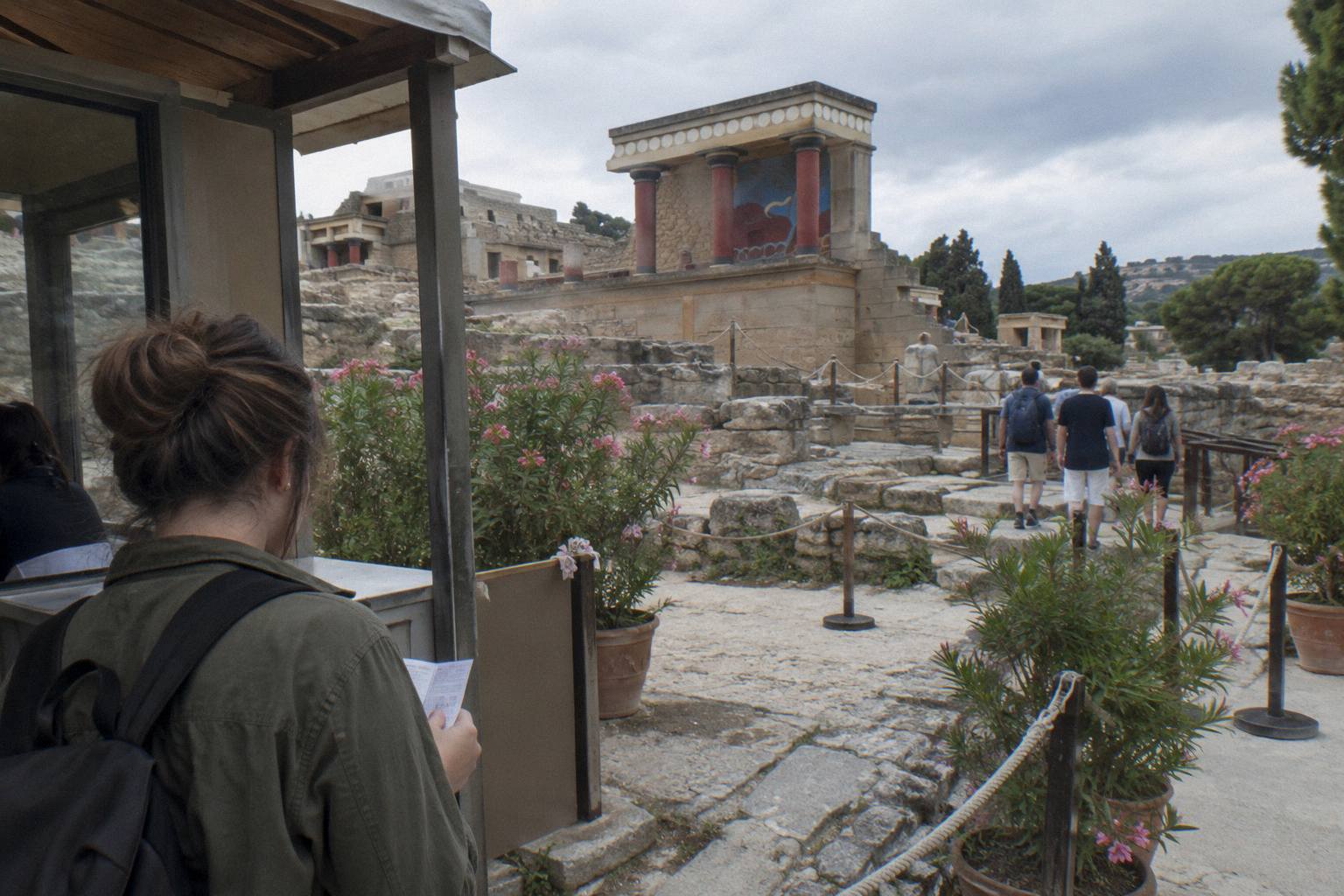
This is the section where the comparison stops being about history and becomes about logistics, and it is short precisely because the Phaistos side is thin on verified detail. What can be said is structural: the Palace of Knossos ticket, hours and free days sit on the official Ministry of Culture schedule, the full ticket is €20 and the reduced ticket €10 with no summer or winter price difference, and the schedule runs from 08:00 to 20:00 in summer with last admission 19:45 and shorter autumn closings, closing in the late afternoon from 1 November. Free admission days on the schedule are 6 March, 18 April, 18 May, the last weekend of September and 28 October. Check the official page for closure notices. Nothing equivalent for Phaistos has been verified here, so nothing is stated, and a traveller planning that side of the comparison should confirm hours and tickets with the official source directly.
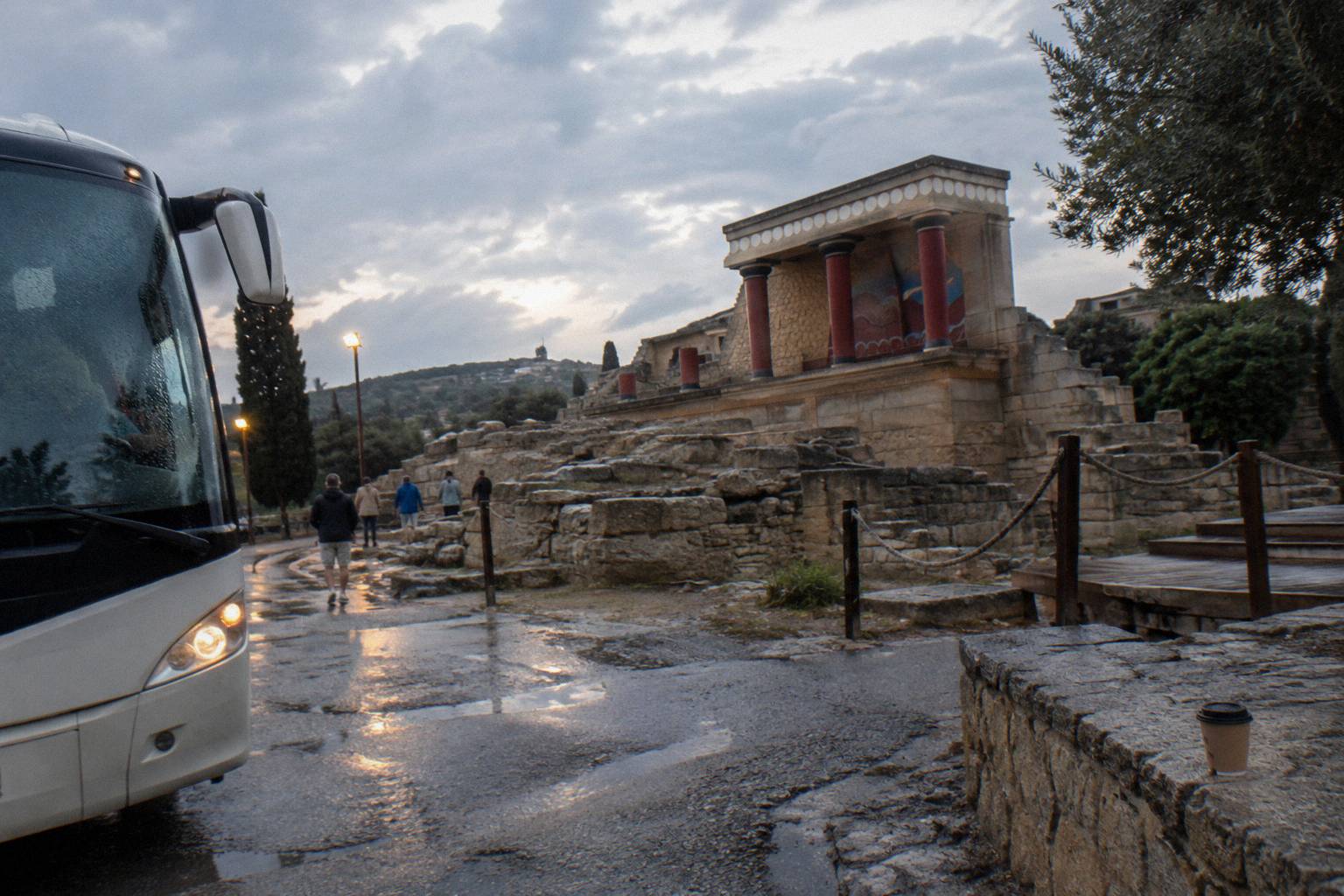
What Knossos offers around that schedule is a full stack of handled options. Getting there is simple: Heraklion centre to the palace is about 5 km, usually 10 to 15 minutes by car or taxi, and the "Bus Transfer, Entry Ticket" trip (4.9 across 34 reviews, from €110 per person) even folds the public bus ride in, meeting a check-in operator in Heraklion and returning with transport to and from the palace included, along with a licensed English-speaking guide and the entry ticket. Cruise passengers docking at Heraklion have a 4-hour shore excursion with a guaranteed return to the ship and a full refund if the ship cannot dock, from €49, holding 4.9 across 37 reviews.
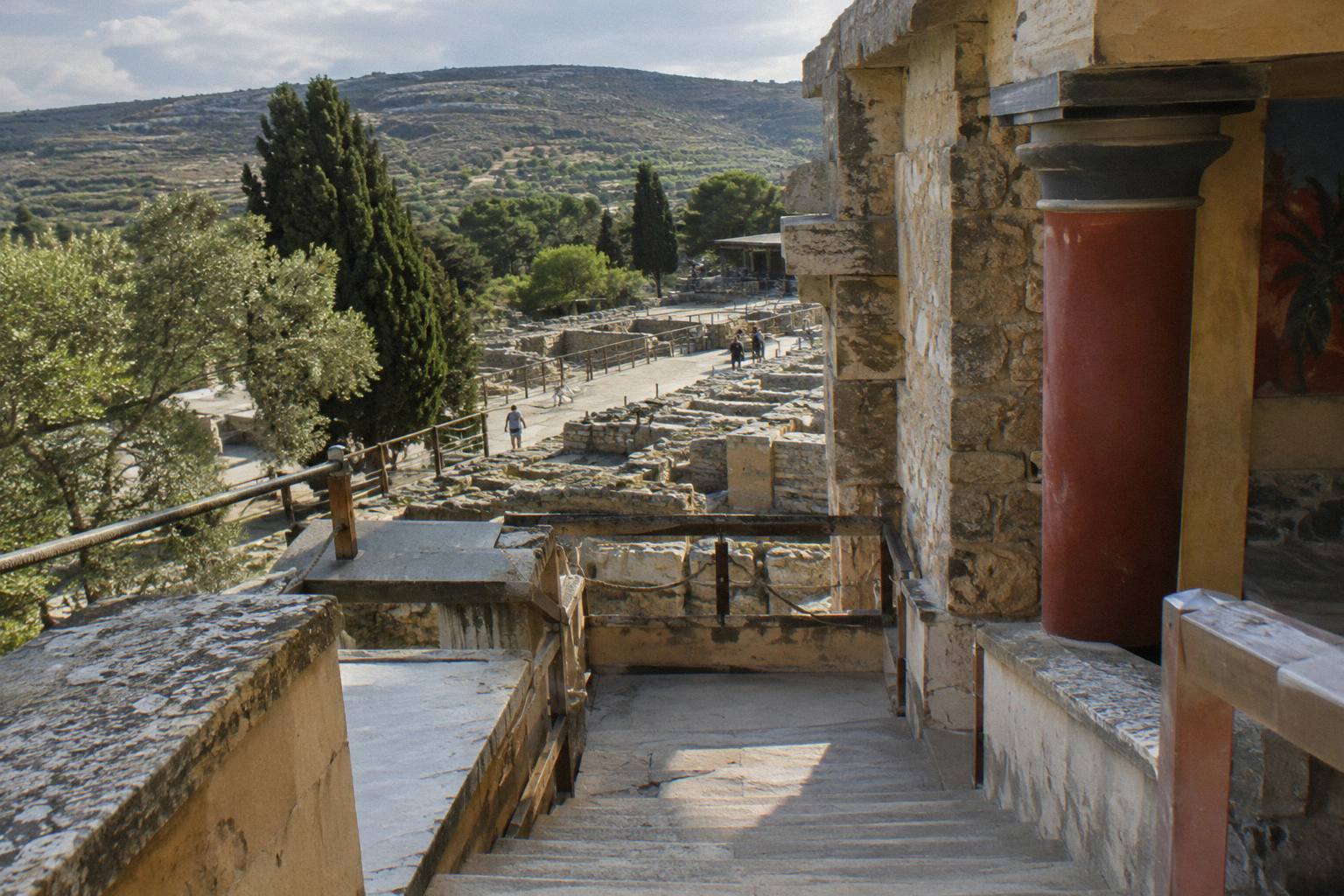
The distance picture widens for the resort towns but stays workable: Hersonissos to the palace is about 20 to 27 minutes, Malia about 29 to 35 minutes, Agios Nikolaos and Elounda about 55 to 62 minutes, Rethymno about 1 hour 10 minutes to 1 hour 20 minutes and Chania about 2 hours to 2 hours 20 minutes each way. The table below gathers those approximate journey times in one place, and a tour's own stated duration always wins over any calculator.
| Starting Point | Distance To The Palace | Usual Journey Time |
|---|---|---|
| Heraklion centre | about 5 km | 10 to 15 minutes by car or taxi |
| Heraklion port | about 5 to 6 km | around 15 minutes by taxi |
| Hersonissos | about 20 to 27 minutes | |
| Malia | about 29 to 35 minutes | |
| Agios Nikolaos and Elounda | about 55 to 62 minutes | |
| Rethymno | about 1 hour 10 minutes to 1 hour 20 minutes | |
| Chania | about 2 hours to 2 hours 20 minutes each way |
Coach days from Chania and Rethymno exist on exactly that basis, with pickup and drop-off at a designated spot, and the planning around them is covered in what a Knossos day from Chania and Rethymno involves. Each of those trips puts the palace within reach on a single day; none of them is built around Phaistos.
None of this ranks the two sites against each other, and the shared 2025 inscription is the reason a ranking would be beside the point. It only describes the shape of the choice: Knossos comes with a day-trip network attached, and Phaistos comes with the knowledge that the visit will be arranged by hand.
What Trips People Up When Booking A Knossos Tour?
The most common stumbles are assuming the palace ticket is always included, assuming the guide is always licensed, and assuming the museum is part of the day. Each of those depends on the individual trip: some include the entry ticket, some exclude it, some offer the museum as an optional add-on, and a driver guide is never a licensed palace guide.
The ticket question is the first one. Five short trips include the palace entry ticket outright (the four €89 walks and the bus-transfer trip), while the €60 Budget Fare Guided Walk, the €33 coach day, the city tours and every Lasithi day exclude it, with the general admission paid separately or on site. A trip that looks cheaper up front can end up with the ticket as an extra cost, and a trip that looks expensive can have it baked in. The per-trip breakdown lives in what a tour price covers at Knossos.
The guide question is the second. On the small-group walks the guide inside the palace is a licensed tour guide. On the private days the picture varies: some use a local English-speaking driver guide with a licensed palace guide available as an extra, the "Private Museum Tour, Per Group" trip (5.0 across 25 reviews, from €560 per group) includes a professional licensed tourist guide, and the taxi-based city tour (4.7 across 37 reviews, from €326.93 per group) is driver only with a tourist guide available at extra cost. Whether that difference matters to you is examined in whether the guide is licensed or just the driver.
The museum question is the third, and it is the one that loops back to the Phaistos comparison. Only the Museum Combo includes the museum ticket. Three short walks offer it as an optional add-on. Everything else excludes it. If the Disc is part of why the comparison interests you, choose a trip that gets you into the museum, or plan the museum as its own stop in Heraklion, where the palace is a short ride away.
Lasithi day trips carry their own two stumbles: the palace entrance and the Zeus Cave ticket are excluded on every one of them, paid on site, and the Cave of Zeus is closed on Tuesdays per the trip entries that mention it. None of that is hidden; it just sits outside the headline price. Below are the three trip shapes that handle the palace day most cleanly: the short guided walk with the ticket included, the palace-and-museum combination, and the full Lasithi day.
Common Questions About Knossos And Phaistos
Is Knossos Or Phaistos Better?
Neither site is ranked here. Both are components of the same 2025 UNESCO inscription, the Minoan Palatial Centres, so the choice comes down to practicalities: every trip covered here visits Knossos, about 5 km from Heraklion, while a Phaistos visit needs its own arrangements.
Are Knossos And Phaistos Part Of The Same UNESCO Site?
Yes. Both are components of the Minoan Palatial Centres World Heritage Site, inscribed in 2025 together with Malia, Zakros, Zominthos and Kydonia in Chania, covering sites dated from 1900 BCE to 1100 BCE.
Where Is The Phaistos Disc Displayed?
In the Heraklion Archaeological Museum, alongside the bull-leaping fresco and the snake goddess figurines. The Museum Combo, Small Group trip includes entry tickets for both the palace and the museum, from €225 per person.
Does Any Tour Here Visit Phaistos?
No. Every trip covered here includes the Palace of Knossos, and none is led by Phaistos or Gortyna. A Phaistos visit requires separate arrangements, and no Phaistos hours, ticket price or drive time is given here.
Which Knossos Tours Include The Heraklion Archaeological Museum?
Only the Museum Combo, Small Group includes both entry tickets outright. The Small Group Skip The Line trip, Ticket With Live Guide and the KnossosGuides trip offer the museum as an optional add-on; most other trips exclude it.
What Is The Cheapest Way To See Knossos On A Guided Day?
The Budget 8-Hour Coach Tour runs from €33 per person with a licensed guide and coach transport, though the palace entrance is excluded. The Budget Fare Guided Walk, from €60 per person, is the cheapest guided palace visit, with general admission paid separately.